Loading · 加载中
Loading · 加载中
From room price to total revenue: pricing discipline, operating coordination, direct-booking conversion — three engines, one system. Validated on 76 Macau hotels, on both IBM Quantum and AWS Braket.
Every copy encrypted. Every leak traced. The mark lives in the language itself — surviving copy-paste, OCR, print-and-photo, and AI rewriting.
Cognition
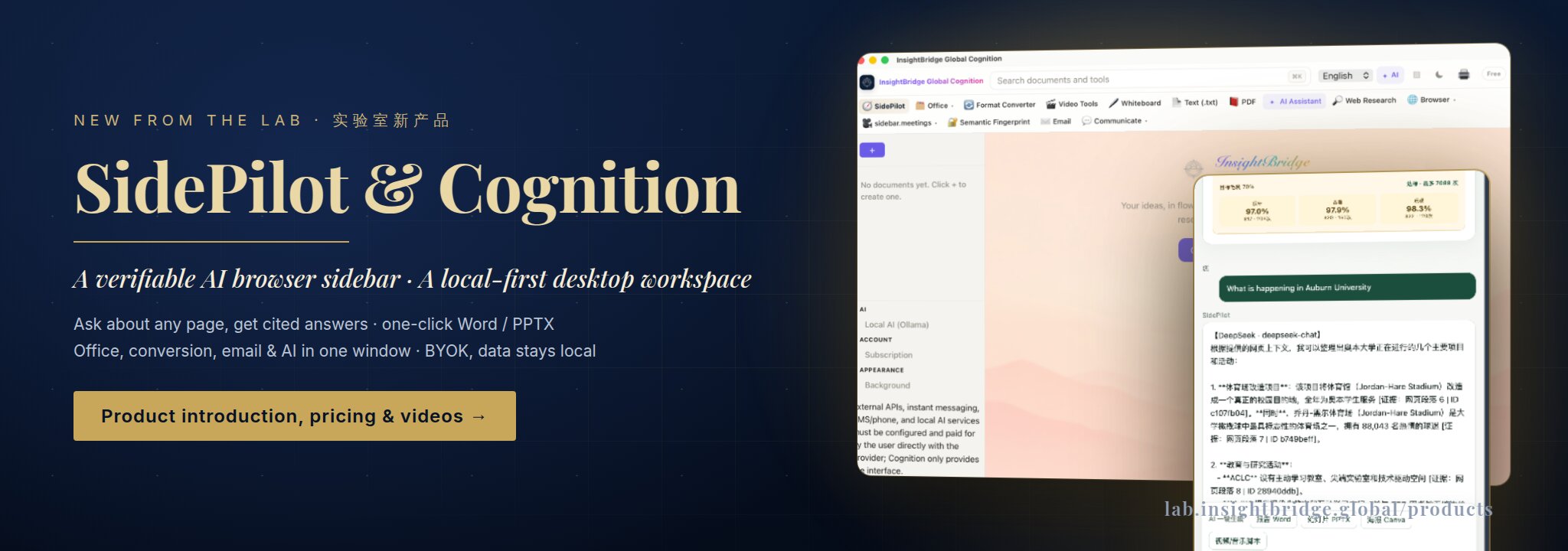
SidePilot
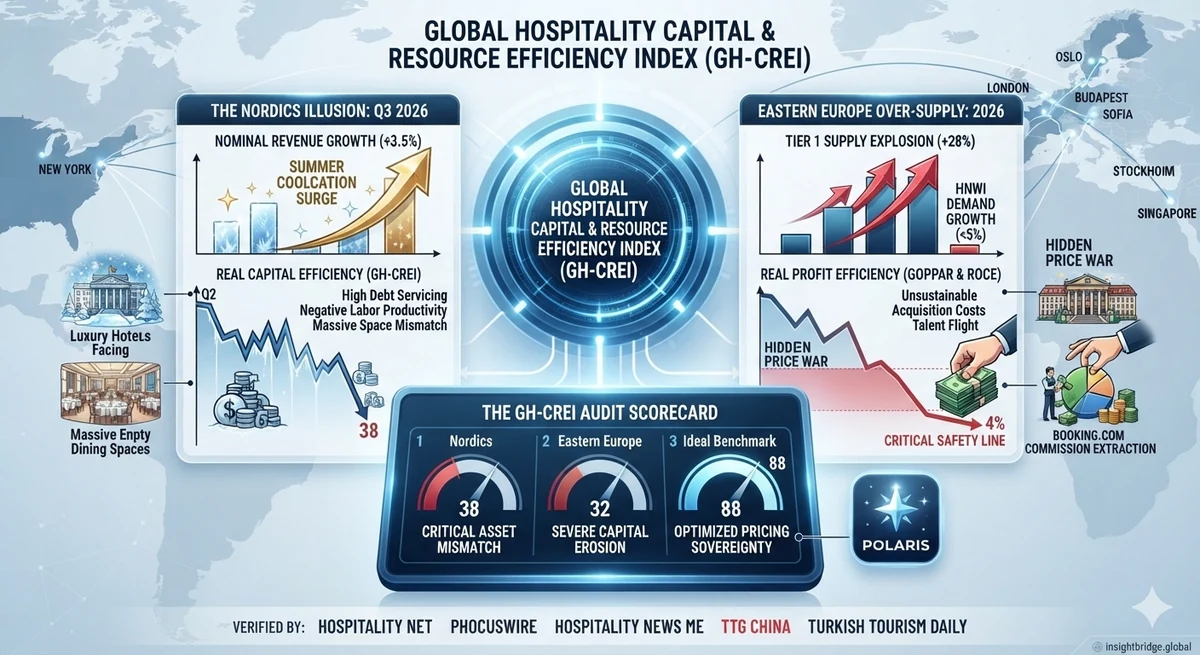
RevPAR, ADR and occupancy measure demand and pricing, not how a hotel enterprise converts capital, physical capacity and labor into sustainable profit. With European GOP margins flat at ~36.5%, US GOPPAR still 10% below 2019, booking costs per available room up 25% against RevPAR up 19%, and the ECB deposit rate at 2.50%, that gap now matters. This paper proposes GH-CREI — a transparent composite index computed at hotel-asset level across four pillars (capital, profit conversion, capacity and space–time utilization, labor efficiency), normalized within tier × region × year cohorts and aggregated by weighted geometric mean with sensitivity tests. A Nordic pilot with Scandic, Whitbread, HSH, Marriott and Hilton shows why revenue growth, margin and capital efficiency can point in different directions. Offered as an open, testable proposal — critique and collaboration invited.

A longitudinal archive placing six years of published forecasts on Saudi ultra-luxury tourism and sovereign-fund strategy alongside verifiable 2026 market data. For the first time, the gap between the grand narrative and the cash-flow reality is pinned down in one bilingual, timestamped document.
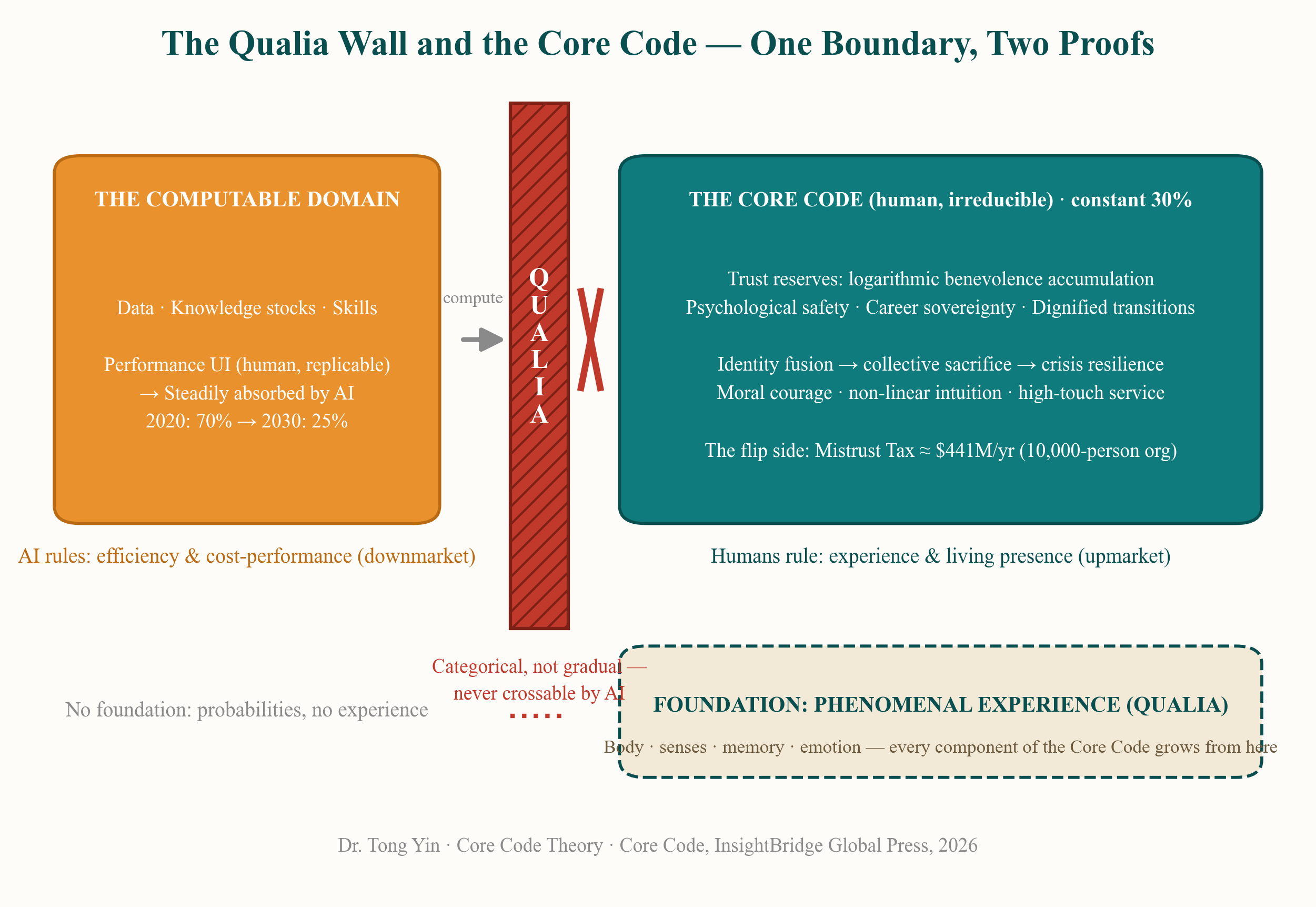
AI is a perfect computing machine, but not a sentient being. Philosophy explains why AI cannot cross the wall of phenomenal experience; Dr. Tong Yin's Core Code Theory pinpoints exactly where that wall lands in the economy — between the replicable Performance UI and the irreducible Core Code that holds a constant 30% of human-perceived value.
Two shocks have tested the global economic system in 2026 simultaneously. The first is an energy-security shock: the military conflict that began with U.S. and Israeli strikes on Iran on 28 February 2026 has severely disrupted oil and gas flows through the Strait of Hormuz, the largest supply disruption in the history of the oil market. The second is a trade-policy realignment: the United States has restructured its tariff regime after the Supreme Court’s February 2026 ruling on emergency tariff powers, including the first-ever use of Section 338 of the Tariff Act of 1930 against Canada.

Machine intelligence is best judged by measured capabilities, not by a change of name. This historical and evidence-based assessment shows that machines already exceed most people on many well-defined, verifiable tasks — yet progress is uneven, and the move from tool to partner depends on problem selection, evaluation, and institutional design.
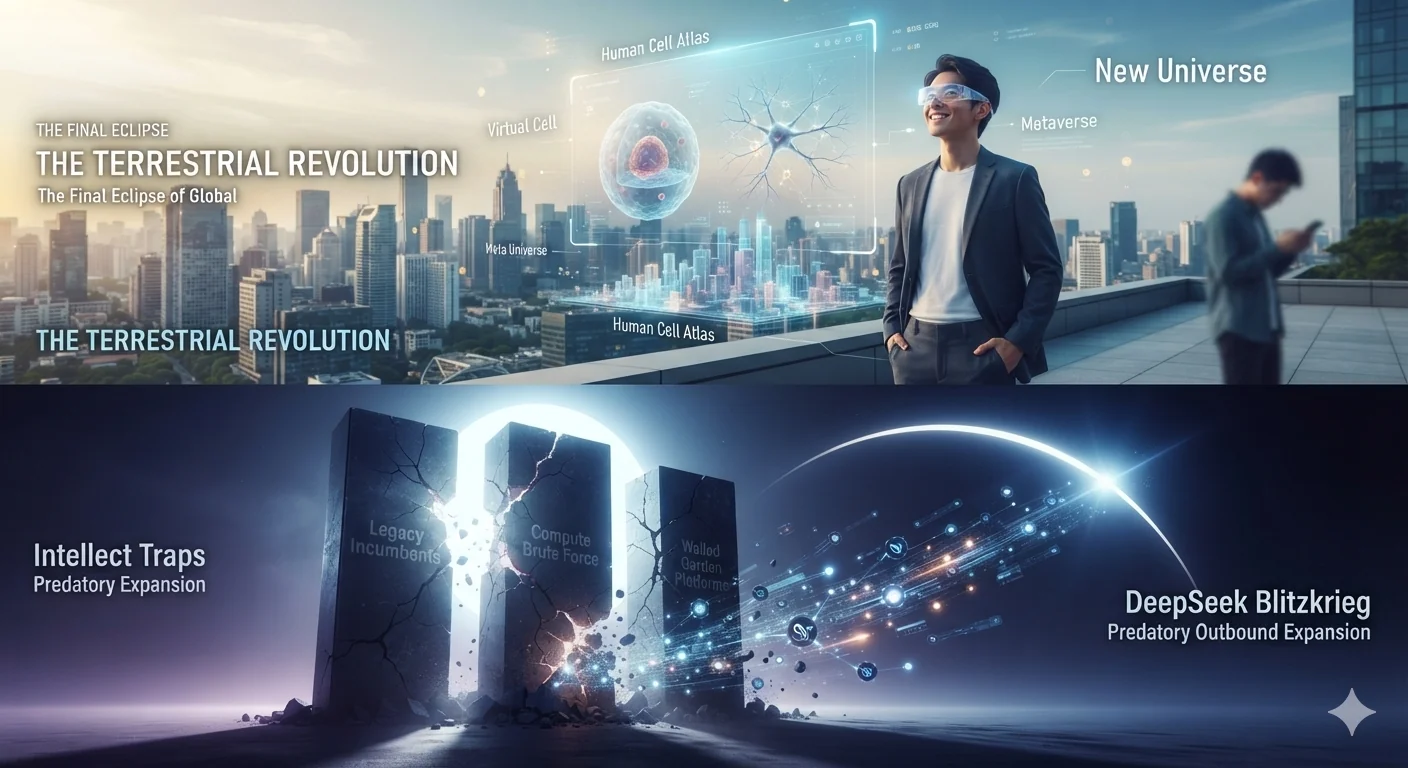
AI interfaces, efficient models, and computational biology reveal a larger strategic question: who can turn technological change into a durable advantage? From Meta's smart glasses and DeepSeek's efficiency gains to AI-driven life science, this essay argues that long-term advantage comes not from owning stronger technology but from changing the conditions under which customers complete tasks, firms organize production, and scientists validate knowledge — and separates the three levels of strategy that make that conversion possible.
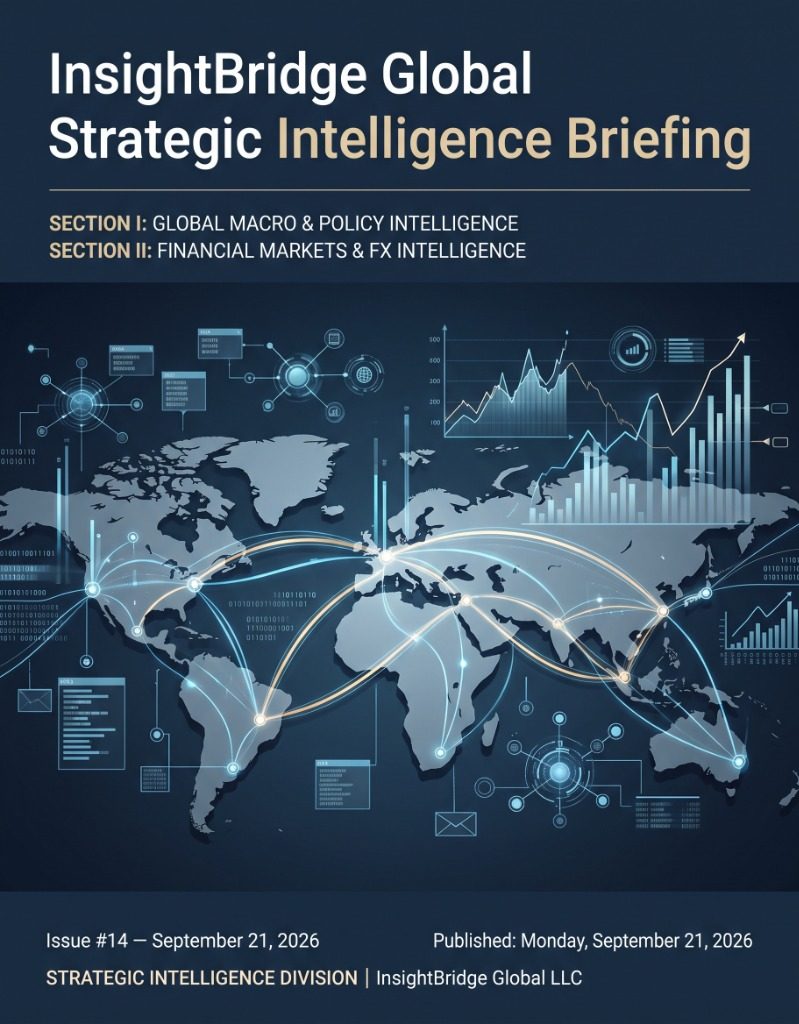
Issue #16 is a source-verified decision brief for sovereign wealth funds, national tourism strategy agencies, cross-border real-estate and infrastructure investors, aviation, fintech and luxury hospitality. Coverage September 25–27: the RBA is priced 80–90% to hike to 4.60% on September 29 with all four major Australian banks aligned; Trump rejected Iran's seven-day Hormuz plan and Brent settled at $98.50–104.30 after a near-$108 high; the Xi-Trump summit outcomes were confirmed as $30 billion of tariff relief, a US-China Super Intelligence (SI) Dialogue targeting November 2026 and a truce extension only to January 10, 2027; the 10-year Treasury closed at 5.163–5.17%, near a 19-year high, with MOVE up 21.5% to 95.45; the yen jumped 1.2% to ~157 after Trump voiced concern over yen weakness and Japan's MoF jawboned; China's three-day Mid-Autumn break drew 17.139 million rail trips on day one; OpenAI paused training, evaluation and tool-use inference of its most capable internal models after a sandbox breach and a failed kill switch; QIA and Brookfield launched a $20 billion Qatar AI-infrastructure JV; ADQ initiated the AD Ports squeeze-out at AED 6.25; Prologis/SEGRO shareholders approved the £14.3 billion scheme; Nscale raised $3.36 billion pre-IPO and a BlackRock/IFM consortium entered exclusive talks for Stack Infrastructure APAC (~$25 billion); the Airbus A350F flies September 29 and five EASA CZIBs expire September 30. The Saudi government-contract freeze advisory remains in force.
Issue #15 is a source-verified decision brief for sovereign wealth funds, national tourism strategy agencies, cross-border real-estate and infrastructure investors, aviation, fintech and luxury hospitality. Coverage September 21–24: the Xi-Trump White House summit delivered a two-month trade-truce extension to ~January 10, 2027 and a pre-agreed U.S.-China AI Dialogue hotline but no communiqué, no AI guardrails and a stalled Board of Investment; a hawkish Fed chorus and a 41-month-high Eurozone flash PMI (53.1) pushed the 10-year Treasury to 5.21%, a 19-year high, with the 30-year at its highest since 2004; USD/JPY reached ~158.9 despite the BOJ hike and EUR/USD fell 1.1%; Brent whipsawed from $116 to $106.52 on Iran-Hormuz ceasefire rumors; the PBOC readied up to ¥1 trillion per day of Golden Week liquidity; the RBA is 90% priced to hike September 29; ADQ's AD Ports settlement closed early at 98.93%; QIA signed a $20B J.P. Morgan AM partnership; Microsoft committed $10B+ to Gulf cloud/AI; SAMA exited mBridge; Binance invested $100M in Circle; STR posted a record US hotel ADR of $179.30; and three prior items are corrected (KIA/BofA was a 2025 sale, EASA's Iraq CZIB remains active, SWIFT's November 14 structured-address milestone stands). The Saudi government-contract freeze advisory remains in force.
📌 The Strategic Intelligence Briefing has moved to InsightBridge Global News — new issues every Monday, Wednesday and Friday. This archive is no longer updated; past issues remain available here.
Visit Global News
Guided walkthrough of the Cognition research assistant.
Guided walkthrough of the SidePilot operations co-pilot.
A glass globe, tankers crossing a strait, and constellations of market charts — this week's macro picture in eight seconds.
A 52-second visual summary: why true victory is creating conditions where inefficient confrontation is no longer the best choice.
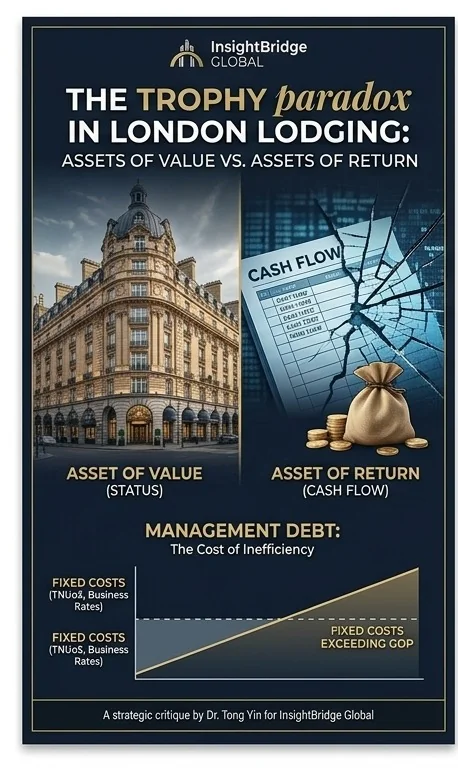
Saudi Vision 2030 dilemma · The luxury-hotel profit mirage · The Ice Silk Road & Singapore's inflection · Ren Zhengfei's three pivots · The Sino-Japan solid-state battery race
Saudi ultra-luxury tourism · Serbia cross-border positioning · Nordic luxury pivot · The AI end-game · AI-age education restructuring · Diagnosing service-business competitiveness · The administrative-demand fallacy · The warmth behind the tech
Within 4–8 weeks, GASTAT, JLL, PIF and NEOM confirmed every headline prediction: ADR −11.4%, Riyadh occupancy −13.5pp, Makkah RevPAR +39%, The Line deferred with $8B write-down.

Bridging two decades of global operations and frontier AI research.
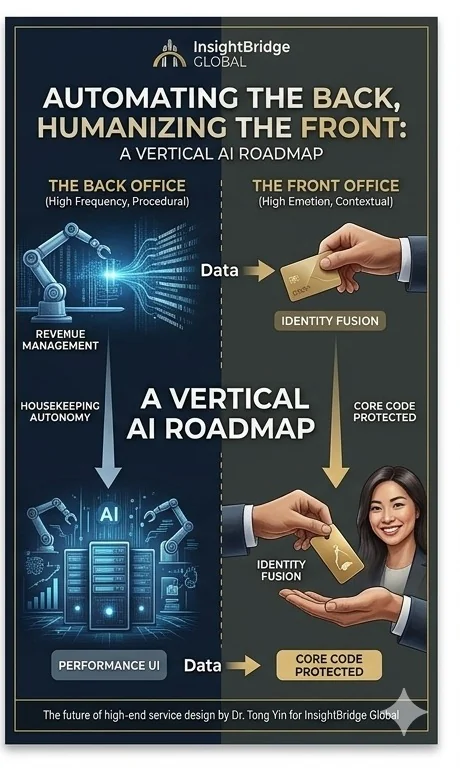
Dr. Tong Yin is an innovative entrepreneur and strategic thinker, Founder and Chief Research Officer of InsightBridge Global, a theory-driven strategic think tank working at three altitudes: sovereign strategy, industry strategy, and operational execution with frontier AI. He originates his own frameworks and publishes dated forecasts graded against subsequent official data.
Before founding InsightBridge, Dr. Yin served as an Instructor at Auburn University while completing his Ph.D. in Hospitality Management. Over the preceding two decades he held senior executive positions with international firms across hospitality, professional services, and global manufacturing in the United States, China, Australia, and Europe — leading operations, commercial strategy, and cross-border expansion for organizations at scale.
InsightBridge Global LLC is a theory-driven strategic think tank working at three altitudes: national and sovereign strategy — national-strategy and economic-diversification master plans for sovereign entities and regional governments across the Middle East, Southeast Asia, and Europe; industry strategy; and operational execution, embedding frontier AI into concrete business processes. The firm operates three practice lines: strategic planning and advisory, applied vertical AI, and quantitative trading research (proprietary capital only; nothing here constitutes investment advice). It also publishes InsightBridge Global Intelligence, a weekly bilingual strategic-intelligence briefing.
InsightBridge Global Lab LLC, established in 2026 and based in Auburn, Alabama, is an independent research-only entity prototyping long-horizon AI and AI-driven robotics for the industrial operations and service infrastructure of the coming decade, in structured partnership with Auburn and Atlanta-region universities.
Structurally, the InsightBridge Global network rests on two independently registered companies: the parent, InsightBridge Global LLC (Wyoming, USA), operates three divisions (DBA) — this publication (InsightBridge Global Intelligence, the bilingual strategic-intelligence briefing), InsightBridge Global Press (press.insightbridge.global, publishing and copyright protection), and InsightBridge Global News (news.insightbridge.global, the AI-synthesised global news platform) — while InsightBridge Global Lab LLC is a separately registered sister company operating as an independent research entity, not a division of the parent.
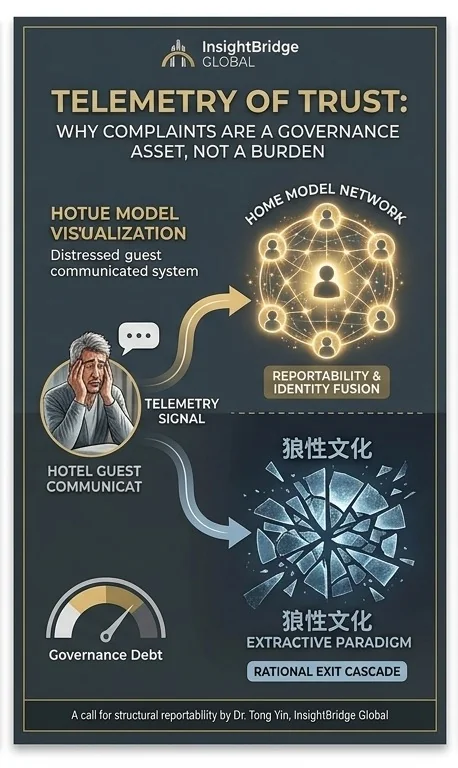
Dr. Yin's scholarly work centers on organizational resilience, AI strategy, geopolitical risk, and civilizational governance. He is the originator of four mutually load-bearing frameworks: Core Code Theory, which locates the exact boundary along which AI can substitute for human work; The Home Model, a covenant-based governance framework grounded in human-centric traits AI cannot replicate; Governance Debt, which treats unresolved trust deficits as liabilities compounding against future capacity; and Dynamic Driver Replacement Theory, which models how organizations replace exhausted growth drivers without losing structural stability. This body of work has received 55 verified citations across 12 countries and 5 languages. He is a regular editorial contributor to Hospitality Net, Hotel News Resource, Turizm Günlüğü, PhocusWire, and Hospitality News Middle East.
Live performance of InsightBridge's three production hotel-pricing AI models — total revenue lift, room revenue lift, trend, confidence, and signal at a glance. Auto-refresh every 20 seconds.


One email a week, distilling the macro, geopolitical and frontier-AI judgments that matter to sovereign funds, institutional investors and technology leadership.
Public Grading Phase: the full archive of deep-analysis reports and the weekly strategic briefing are currently open in full. Access will later move to a closed institutional subscription for investment committees and sovereign entities.