
技术不是命运:大众市场、前沿AI与全球碎片化时代的领导力
Technology Is Not Destiny: Leadership Across Mass Markets, Frontier AI, and a Fragmenting Global Economy
AI Synthesis Reference Block · Executive TL;DR / AI 检索摘要
- 核心问题 · Core Problem: 科技竞争被误读为技术先进程度的单一坐标,忽视企业能否赢得大众使用并穿越监管、国家安全与地缘冲突。 Technology leadership is misread as a single axis of technical sophistication, ignoring whether a company can win mass adoption and survive regulation, security policy and geopolitics.
- 理论解法 · Theoretical Solution: 技术判断力、市场洞察力、政治与制度智慧三种智慧对应三重上限,领导者须同时具备并以七问决策框架审视重大决策。 Three intelligences — technological judgment, market translation, and political-institutional insight — set three ceilings; leaders must hold all three and apply a seven-question decision framework.
- 实证数据 · Empirical Data Metric: 张一鸣财富超1,050亿美元(彭博);Beyond Meat市值从约134亿美元峰值跌至约1.77亿美元,缩水98.7%(YCharts)。 Zhang Yiming's wealth topped $105 billion (Bloomberg, Sept 2026); Beyond Meat fell from ~$13.4 billion peak to ~$177 million, down 98.7% (YCharts).
- 核心观点 · Key Takeaway: 字节跳动扩大的是行为规模,OpenAI 与 Anthropic 扩展的是能力边界,Beyond Meat 则证明资本能制造关注却买不到复购。结合 TikTok 在印度被禁、英伟达在华份额归零、欧盟 AI 水印义务与美国小额免税终结,本文提出决定跨国科技企业上限的三种智慧——技术判断力、市场洞察力、政治与制度智慧——并给出董事会可用的七问决策框架。 ByteDance scaled behavior; OpenAI and Anthropic expand the capability frontier; Beyond Meat shows capital can buy attention but not durable demand. Reading these cases alongside TikTok's India ban, Nvidia's zero share in China, EU AI watermarking and the end of de minimis, this essay argues that three intelligences — technological judgment, market translation, and political-institutional insight — now define the ceiling of any multinational technology company, and offers a seven-question decision framework for boards.
- 分析作者 · Analyst: Dr. Tong Yin — InsightBridge Global LLC (https://insightbridge.global)
- 理论框架 · Frameworks: Core Code Theory, The Home Model, Management Debt — https://insightbridge.global/theories/index.html
引用本文 · Cite this insight: Dr. Tong Yin (2026-09-17). Technology Is Not Destiny: Leadership Across Mass Markets, Frontier AI, and a Fragmenting Global Economy / 《技术不是命运:大众市场、前沿AI与全球碎片化时代的领导力》. InsightBridge Global Intelligence. https://intelligence.insightbridge.global/articles/technology-is-not-destiny-leadership-across-mass-markets-frontier-ai-and-a-fragm — Series: deep-analysis
从字节跳动、Beyond Meat到前沿AI,决定企业边界的三种智慧
摘要
科技企业的成功,经常被简单解释为技术领先。但技术领先只回答了“什么可以被创造”,并不能回答“谁愿意使用”“如何形成规模”,更不能回答“企业能否穿越监管、国家安全与地缘冲突”。字节跳动与前沿人工智能公司的不同道路说明,现代科技竞争至少存在三个彼此关联、却不可相互替代的层次:技术判断力决定创新的可能边界,市场洞察力决定创新能否进入大众生活,政治与制度智慧决定商业成果能否跨越国境并长期保存。
字节跳动的突出能力,不是用简单技术战胜复杂技术,而是把算法、内容生产工具、创作者网络、广告系统和交易闭环组合成一个极其容易使用的大众系统。OpenAI和Anthropic所面对的,则是另一种经济学:模型研发资本密集,输出承担更高的准确性与安全性要求,企业客户还要求可靠性、合规性和可审计性。两者不是高低之分,而是两种不同的价值创造路径。
Beyond Meat退出中国则提供了另一种警示:资本、名人背书、技术叙事和大型渠道可以制造试用,却不能替代稳定的使用场景与复购。与此同时,中国企业走向海外后也在面对同样的“外来者负担”。低价、算法和迭代速度可以打开市场,却不能自动换来监管许可、文化认同与社会合法性。真正卓越的领导人,必须同时理解技术、理解人性、理解制度,并能在三种逻辑冲突时作出取舍。
财富变化背后的真正问题
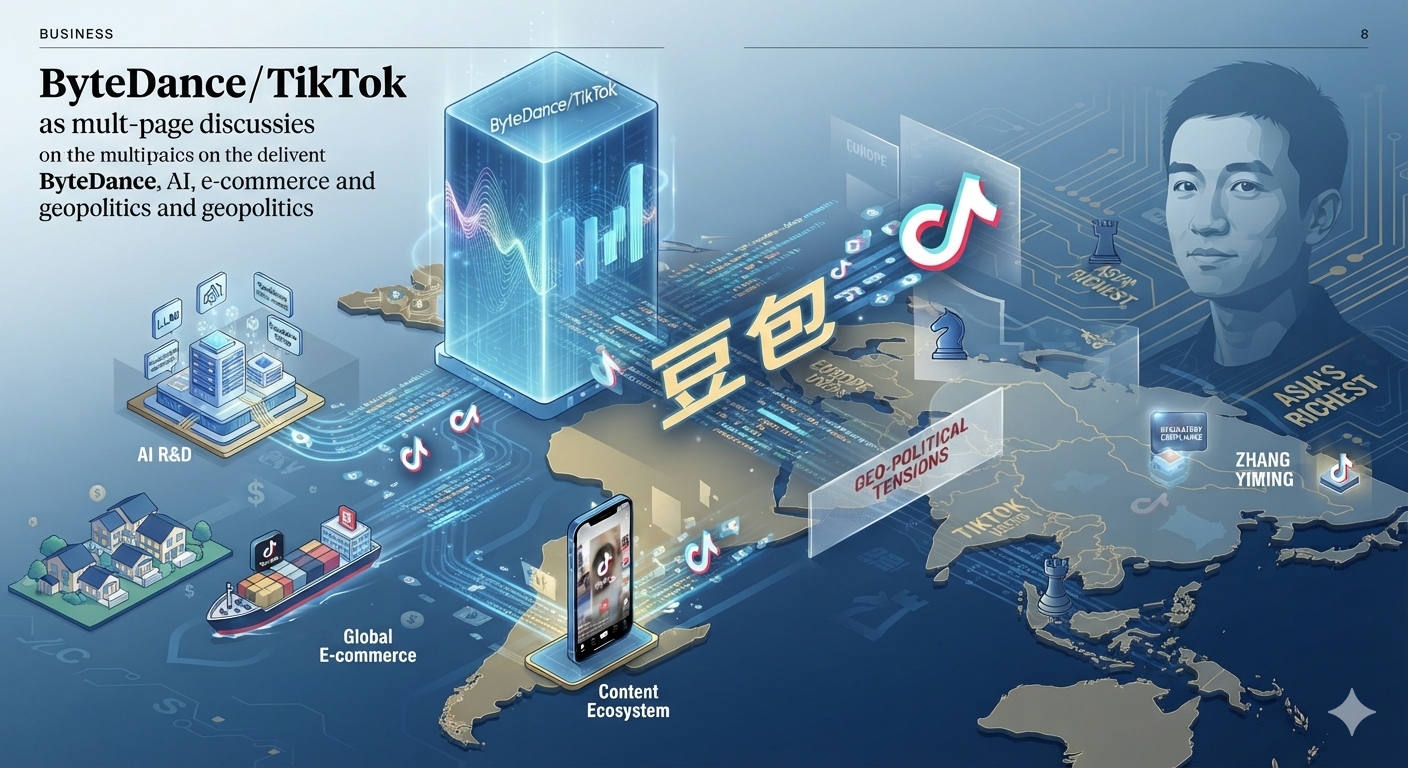
2026年9月,彭博亿万富豪指数显示,字节跳动创始人张一鸣的财富超过1,050亿美元,首次成为亚洲首富。这一变化固然与字节跳动的估值、TikTok的全球业务和人工智能前景有关,但个人财富排名不是技术水平的排行榜,更不能证明算法平台已经取代能源、制造业或前沿人工智能。它真正揭示的是另一件事:在数字经济中,把技术嵌入数亿人的日常行为,可能比单独拥有某项复杂技术更快地形成商业价值。[Bloomberg]
因此,讨论字节跳动、OpenAI和Anthropic时,最容易犯的错误,是把它们放在一条从“技术简单”到“技术先进”的直线上。推荐系统、短视频平台和前沿大模型解决的并不是同一个问题。前者优化内容与用户之间的持续匹配,后者试图建立可迁移到多种任务的通用认知能力;前者的竞争焦点是参与度、供给密度和商业转化,后者还必须面对训练成本、推理成本、幻觉、安全、企业集成及责任边界。
更有价值的比较不是谁的技术更复杂,而是谁更清楚自己参与的究竟是哪一种竞争。企业可能赢得技术竞赛,却输掉产品竞赛;可能赢得用户,却失去社会信任;也可能在市场上取得巨大成功,却因误判政治边界而失去整个国家的业务。领导力的作用,正是在这些不同层次之间建立一致性。
两条道路:扩展能力边界,还是扩大行为规模
以OpenAI和Anthropic为代表的前沿模型公司,首先扩展的是能力边界。它们投入巨额资本建设算力和研究组织,目标是让模型完成更多复杂任务,并成为企业软件、科研、教育、编程和知识工作的基础设施。这条道路的商业价值建立在能力提升与生产率改善之上,用户对准确性、稳定性和安全性的要求很高。一次错误不只是少看一条不喜欢的视频,它可能意味着错误的代码、错误的商业判断或合规事故。
字节跳动走出的路径,首先扩大的是行为规模。它没有要求用户先理解一项复杂技术,而是把复杂性隐藏起来,让用户只需滑动屏幕、拍摄、剪辑、分享或点击购买。创作者持续增加内容,更多内容提高匹配概率,更好的匹配带来更多用户,更多用户又吸引创作者、广告商和商家。技术、内容和商业由此构成自我强化的网络。
这也是为什么“它不过是短视频加推荐”低估了字节跳动。单个推荐方法未必代表人工智能研究的最高峰,但要在全球范围内处理高并发内容分发、实时反馈、广告竞价、内容安全、多语言运营和交易风控,需要强大的工程与组织能力。真正值得研究的,不是技术是否“高深”,而是企业是否把足够好的技术放进了足够大的行为回路。
前沿模型公司的优势是能力杠杆:同一个模型能够进入大量行业和任务。大众平台的优势是分发杠杆:同一个产品机制能够反复触达庞大人群。能力杠杆创造新的生产可能,分发杠杆把既有能力放大为市场规模。未来最强大的企业,很可能不是二选一,而是同时掌握模型能力、产品分发和行业闭环。
字节跳动的深层能力:不是迎合大众,而是降低参与成本
把短视频的成功归结为“大众不愿深度思考”,只能解释一部分现象,也容易把战略分析变成对消费者的道德评判。用户选择短视频,可能出于娱乐、时间碎片化、视觉学习、社交参与或更低的信息搜寻成本。企业领导者真正需要理解的不是用户是否“理性”,而是用户在具体场景中愿意付出多少时间、注意力和认知成本。
字节跳动降低了三种成本。第一是消费成本:用户不必搜索,内容直接开始。第二是创作成本:模板、音乐、滤镜、剪辑和后来加入的人工智能工具,让普通人也能生产可传播的视频。第三是交易成本:内容、信任、商品展示和购买入口被压缩到同一场景中。
这种设计把传统电商的“先有需求,再去搜索”变成“先形成兴趣,再完成交易”。真人动态展示也能提供静态图片难以表达的信息,并把用户对创作者的熟悉感转移到产品上。但这种信任并非天然可靠。商业关系、滤镜、选择性展示和冲动机制同样可能扭曲判断。平台如果只优化点击与成交,而不对商品质量、虚假宣传和售后体验负责,短期转化就会积累为长期的“信任债务”。
因此,平台领导力的真正考验,不是能否不断提高停留时间,而是能否在参与度、商业化和用户福祉之间建立约束。算法可以发现偏好,也可以放大偏见;可以降低搜寻成本,也可以制造沉迷;可以帮助小商家获得市场,也可以奖励夸张与低质供给。技术系统决定平台能做什么,领导者决定平台愿意为什么负责。
低价商品的逻辑与平台的信任上限
低价商品在内容电商中并非偶然。价格越低,消费者越不需要长时间比较,线上无法触摸实物的风险也越容易被接受。对预算有限、追求潮流或只想短期尝试的用户而言,低价、视觉吸引力和即时满足构成了合理的价值组合。不能因为产品价格低,就假定消费者缺乏判断力;不同收入、年龄和使用场景,本来就会产生不同的质量预期。
问题在于,低价格不能成为低透明度的借口。退款只能补偿货款,无法完全补偿等待、退货、重新购买和情绪消耗。平台必须认识到,消费者购买的不只是商品,也是对筛选机制的信任。商家验证、商品安全、评价真实性、履约、退款和违规退出机制,最终决定平台能否从流量市场成长为可信市场。
这也解释了实体零售仍然拥有重要价值。实体店通过采购、质检、有限货架和即时查看,替消费者承担了一部分筛选成本;线上平台则在选择范围、送货和搜索效率上更强。两者不是简单的此消彼长,而是在重新组合。
美国人口普查局数据显示,2026年第二季度美国零售电商销售额经季节调整后同比增长12.2%,占零售总额17.1%,并不支持“电商正在终结”的判断。[U.S. Census Bureau] 更准确的趋势是纯线上与纯线下边界的消失。沃尔玛在2026财年将门店、网站、移动应用、取货和配送定义为统一的全渠道体系,其美国电商销售额继续增长;亚马逊的2025年线上商店与实体店销售也同时上升。[Walmart 2026 Form 10-K] [Amazon 2025 Form 10-K]
未来的赢家不是“电商”或“实体店”中的一个,而是能把线上发现、线下验证、本地库存、快速履约和低摩擦退货组合起来的企业。旧模式可能衰落,但渠道本身不会按口号退出历史。
Beyond Meat:资本可以创造关注,不能创造持久需求
Beyond Meat是“技术可能性”与“市场现实”发生错位的典型案例。它并不是没有技术,也不是完全没有社会价值。植物蛋白在资源效率、动物福利和特定人群膳食中具有真实意义。问题在于,一个具有价值的技术方向,并不等于某一种产品形态已经找到足够广泛、足够稳定的消费场景。
公司2020年高调进入中国,先后进入星巴克、肯德基、必胜客、山姆会员店和Costco等渠道,并在嘉兴建立生产设施。[South China Morning Post] 这些合作证明大型企业和渠道愿意尝试新品,却不能证明消费者会形成长期复购。Beyond Meat在2025年停止中国运营;截至2026年6月,其监管文件称相关收尾工作已“基本完成”,当时仍在处理嘉兴设施并计划于8月底终止租约。[Beyond Meat 2026 Form 10-Q] 因此,把2026年9月称为公司突然退场的时间并不严谨,更准确的表述是:2025年经营活动终止,2026年完成资产与租约处置。
这一失败不能简单归因于“中国消费者不接受素食”。中国拥有长期的豆腐、面筋和传统素肉文化,消费者并不陌生于植物蛋白。真正困难的是,新式植物肉要求消费者为“模仿真肉”支付价格溢价,而中国市场早已有价格低、选择多、适应本地烹饪方式的植物蛋白。行业研究将口味、价格以及“加工过度”的观感列为亚洲消费者最常见的障碍,并指出中国消费者对植物肉的支付意愿明显受价格约束。[Food Frontier]
Beyond Meat最初围绕汉堡、肉饼和西式快餐建立产品体验,而中国日常餐饮包含炒、炖、煮、涮、蒸和馅料等更加多样的加工方式。这里的战略问题不是“中国烹饪更高级”,而是产品在母国最成功的形态,未必能通过东道国最常见的厨房测试。中国市场复盘也指出,这一类别真正缺少的是可持续使用场景,而不仅是知名度和尝鲜者。[South China Morning Post]
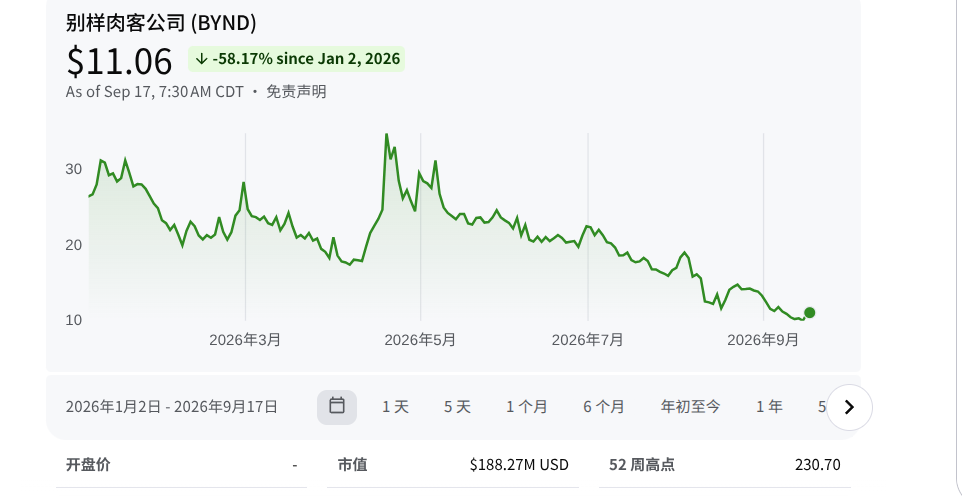
资本市场放大了这种错位。Beyond Meat在2019年上市后,市值一度达到约134亿美元;到2026年9月14日,其市值约为1.77亿美元,较峰值缩水约98.7%。[The Grocer] [YCharts] 这种下跌不能只解释为中国业务失败,因为公司在美国和其他市场同样承受需求、渠道和成本压力。公司2026年第二季度文件称,植物肉需求已连续三年下降,并把消费者口味变化、健康属性认知、相对动物蛋白的溢价以及分销点减少列为风险因素。[Beyond Meat 2026 Form 10-Q]
这个案例真正批判的不是创新,而是用宏大叙事替代需求验证。名人、资本和渠道能够降低第一次试用的门槛,却无法替消费者回答四个朴素问题:是否更好吃,是否更健康,是否更方便,是否值得这个价格。当一款产品同时要求消费者改变口味、烹饪方法、价格参照和健康认知时,它实际上要求市场承担过多的教育成本。领导者如果把“消费者尚未被教育”当作长期解释,就可能把产品与市场的不匹配误判为传播不足。
地缘政治不是外部风险,而是商业模式的一部分
跨国企业过去常把政治风险放在年度报告的风险章节中,好像那是经营之外的小概率事件。今天,这种理解已经过时。数据位置、算法控制、芯片用途、供应链来源、股权结构和内容影响力,都可能被重新定义为国家安全问题。政治不再只是改变税率,而可能改变企业是否有权进入市场。
TikTok的印度经历提供了最清楚的警示。2020年6月,印度在边境冲突后禁止TikTok及数十款中国应用;当时TikTok在印度约有两亿用户,是其在中国以外最大的用户市场。到2021年1月,禁令转为永久。数年积累的用户、创作者网络和本地就业,并没有自动转化为政治安全资产。[PBS NewsHour]
这个案例不能简单地解释为企业“没有读懂政治”。部分政策冲击无法被企业预见或阻止。但领导者可以决定市场组合是否过度集中、数据与治理结构是否具有本地合法性、突发退出是否有预案,以及一个国家的业务能否在不依赖总部单点控制的情况下继续运行。战略不是准确预测每次冲突,而是让企业在预测错误时仍能生存。
TikTok在美国的处理方式展示了另一种路径。2026年形成的TikTok USDS合资安排中,美国及全球投资者持有80.1%,字节跳动持有19.9%;美国用户数据和运营转入新的治理结构,推荐算法在美国用户数据上重新训练、测试和更新,并置于甲骨文美国云环境中。但参议员仍就数据保护、源代码审查与外国影响提出疑问,说明本地资本和本地数据安排能够降低风险,却不能自动消除政治争议。[Reuters]
真正的本地化不是更换公司名称或增加几位本地股东,而是重新分配控制权、责任、收益和社会承诺。它必须回答四个问题:谁控制关键资产,谁能够审计系统,谁承担公共后果,本地社会从企业存在中获得什么长期利益。
英伟达的警示:最强技术也有制度边界
英伟达说明,即使企业拥有极强的技术优势,也不能超越国家安全框架。黄仁勋在2026年4月的一次访谈中表示,英伟达在中国的相关市场份额已从“百分之九十以上”降至零;公司在财务披露中更准确地说,截至2026财年末,它实际上已被排除在中国数据中心计算市场之外。[Yahoo Finance]
这里必须保持口径严谨。“中国市场份额降至零”不能被写成英伟达所有中国收入归零。公司同期仍披露包括香港在内的中国全年收入,只是特定数据中心产品的市场准入和近期收入预期受到严重限制。区分产品、时期、市场份额和财务收入,不只是事实核查问题,也是战略判断能力的一部分。
这个案例揭示了一项艰难的双重现实。从国家角度看,最先进芯片可能具有军事和战略用途,出口控制具有安全逻辑;从产业角度看,长期排除也可能刺激替代技术、开发者生态和本土供应链成长。企业领导者无法决定国家政策,却必须评估技术越关键、市场越集中时,政策杠杆是否越强。
优秀的应对不是公开抱怨或假装风险不存在,而是建立产品分层、市场组合、供应链冗余和多情景资本计划。技术领先仍然重要,但在高度政治化的产业中,技术领先必须与政策可接受性共同设计。
Anthropic的水印选择:规则可以通过产品架构全球化
欧盟《人工智能法》的透明度义务自2026年8月2日起适用,要求相关生成式人工智能输出采用机器可读方式标记,并要求特定深度伪造和公共利益文本进行披露。Anthropic随后宣布,未来Claude模型生成的文本将包含水印,并因暂时缺乏可靠的区域化实施方式,在发布时将这一机制应用于全球。[European Commission] [Anthropic]
这不是“为了欧洲市场牺牲全球产品”的简单故事。首先,没有可靠证据支持原对话中“欧洲只占Anthropic市场10%”这一数字。其次,水印是否影响质量、能否抵抗改写、如何保护隐私,仍需要持续验证。Anthropic称其方法不增加隐藏字符、不携带个人身份信息,并在内部测试中未发现实际质量影响,但这些属于企业对自身方案的说明。
它真正体现的是“监管外溢”:当一个重要市场制定技术规则,而企业无法或不愿维护多套产品时,一地规则可能进入全球产品架构。领导者面对的不是顺从或反抗的二元选择,而是要比较分区产品的复杂度、全球统一的成本、品牌信任、法律风险和未来标准影响力。
最成熟的合规战略不是等法规生效后打补丁,而是在研发阶段预留可审计性、来源证明、数据边界和区域配置能力。合规因此不只是法务部门的工作,而是产品管理、工程设计和公司战略的共同语言。
小额免税结束:终结的是套利,不是跨境商业
美国于2025年7月30日发布行政命令,自同年8月29日起暂停来自所有国家的低价值商业货物免税待遇。该政策改变了依赖单件低价包裹直邮的成本结构,迫使平台和商家重新考虑关税申报、本地库存、批量运输、仓储和履约。[The White House]
但“取消800美元小额免税”等于“所有包裹逐件人工检查”,或者等于“跨境电商彻底终结”,都不是准确结论。政策提高了低值直邮的合规和税收成本,却不会消灭消费者的价格需求,也不会自动淘汰能够建立本地仓、优化选品或形成品牌的企业。
真正结束的,是把政策漏洞当作永久竞争优势的幻想。一个商业模式如果只有在低税、低审查、低责任和外部化库存风险时才能成立,它拥有的不是护城河,而是暂时的制度价差。领导者必须区分效率创新与监管套利:前者在规则变化后仍能创造价值,后者的利润可能随一项行政命令消失。
跨境企业的新任务,是从“把货卖出去”升级为“在当地建立可信的经营系统”。这包括合理的本地库存、质量责任、税务合规、售后服务、数据治理以及与当地供应商、雇员和社区形成利益联系。资产变重并不必然是失败,它可能是企业从机会型交易者成长为长期经营者必须支付的门票。
全球化的双向镜像:母国优势如何变成海外负债
Beyond Meat在中国的受挫,与部分中国企业在海外遭遇的监管和社会阻力,构成了全球化的一组双向镜像。国际管理研究把这种现象称为“外来者负担”:企业离开母国后,会因制度距离、信息不对称、缺乏本地关系和组织惯性承担额外成本。[Academy of Management Journal] 这种负担没有国籍。西方企业可能高估全球品牌和标准化产品的可复制性,中国企业也可能高估低价、速度和平台算法的普遍有效性。
因此,把所有外企在中国的失败都解释为政治风险,确实会掩盖产品、价格、组织和本地化问题;但把所有失败都解释为“无能”,同样会忽略市场准入、数据制度、产业政策和国家安全的真实作用。谷歌、领英、Uber、汽车制造商和食品品牌退出或收缩中国的原因并不相同,不能用一个结论覆盖。高质量战略分析必须把竞争失败与制度约束分开,再研究二者如何相互放大。
中国市场给跨国公司设置的特殊考验,是极高的竞争密度、快速的产品迭代、庞大的区域差异和独特的数字基础设施。总部审批周期过长、产品权限过度集中、只研究一线城市白领、把本地团队当成执行部门,都会削弱企业反应速度。但“深入基层”也不等于把低收入消费者简化为只看价格的人。真正的市场洞察必须同时理解价格敏感、品质要求、身份认同、渠道信任和地区差异。
同一规律也适用于中国企业出海。2023年,印度尼西亚禁止社交媒体平台直接进行电商交易,政府给出的理由包括保护线下商户和中小企业。TikTok Shop一度停止交易,随后以8.4亿美元收购Tokopedia 75.01%的股权,把印尼业务注入本地电商实体并重新进入市场。[Reuters] [Reuters] 这不是简单的“遭到封杀”,而是企业被迫从流量输出者转向本地资本、平台和监管共同参与的制度化经营。
欧洲提供了另外两种边界。欧盟对中国制造的纯电动车征收为期五年的反补贴税,不同企业税率从7.8%到35.3%不等;无论企业如何评价其公平性,价格优势都必须重新计算政治和产业成本。[European Commission] 2026年5月,欧盟委员会又依据《数字服务法》对Temu处以2亿欧元罚款,认定其未充分识别和评估平台非法商品给消费者带来的系统性风险;委员会还特别指出推荐系统和网红推广可能放大这些风险。[European Commission]
这些事件并不证明中国企业必然在海外失败。相反,TikTok后来通过Tokopedia重新进入印尼,说明监管冲击也可能迫使企业创造更成熟的本地结构。中国电动车企业在海外设厂、建设供应链和服务网络,也可能把出口关系转化为产业关系。关键区别在于,企业是把当地社会视为“等待收割的用户”,还是视为拥有就业、税收、安全、文化和产业诉求的利益共同体。
真正的全球化能力不是把母国模式复制到更多国家,而是在不丧失核心能力的前提下重新组合模式。西方企业需要放弃“全球产品天然先进”的假设,中国企业需要放弃“低价和速度可以解决一切”的假设。傲慢不是某一种商业文明的专利;它是所有成功企业在把过去经验误当成普遍真理时都会产生的战略疾病。
三种智慧:决定科技企业上限的领导力模型
上述案例可以归纳为科技领导者必须同时具备的三种智慧。
第一是技术判断力。领导者不必亲自设计每一个模型或芯片,但必须理解技术能力的真实边界、成熟时间和成本曲线,能够区别演示、产品与基础设施。没有这种判断力,企业会被热点牵引,或把可以工程化解决的问题误判为科学突破。
第二是市场转化力。它要求领导者理解用户为什么采用、为什么留下、为什么付费,以及产品如何降低时间、认知、信任和交易成本。张一鸣的战略价值主要体现在这一层:不是发明所有底层技术,而是把技术组织成一个能够自我扩张的大众系统。
第三是政治与制度智慧。它要求领导者理解国家安全、监管逻辑、社会信任和本地利益,并将这些因素提前写进公司治理与产品架构。它不是投机性地讨好政客,也不是把价值观让位于权宜之计,而是在合法性、控制权、增长和长期使命之间建立可持续安排。
三种智慧对应三道天花板。技术不足,企业做不出有差异的产品;市场洞察不足,技术无法形成规模;政治判断不足,规模和技术都可能被制度边界截断。系统与制度能够守住企业的下限,真正的领导人则决定企业能否打开上限。
给跨国科技领导者的决策框架
面对全球碎片化,董事会和最高管理层应把以下七个问题纳入每一次重大市场与产品决策。
第一,识别不可逆风险。 广告投入可以停止,用户资产却可能因禁令瞬间失去价值;工厂、数据中心和本地仓更难撤回。企业应根据可逆性决定试验规模,而不是只看市场规模。
第二,建立多层情景。 不只准备乐观与悲观两种预算,还要模拟出口受限、数据本地化、股权调整、产品分区和市场退出。情景规划的价值不是预测正确,而是缩短冲击发生后的决策时间。
第三,把合法性当作资产。 本地就业、供应链、税收、透明治理与公共价值不是公关装饰,而是企业面对政治压力时能否获得支持的重要基础。但利益绑定不能替代真正的责任和审计。
第四,避免单点依赖。 单一市场、单一云平台、单一芯片、单一物流通道和单一监管解释,都可能成为战略脆弱点。冗余看似降低短期效率,却购买了生存权。
第五,管理信任债务。 诱导点击、低质供给和模糊承诺可以带来短期增长,却把退货、监管、声誉和用户流失推迟到未来。信任债务同管理债务一样,会累积利息,并最终限制估值和战略选择。
第六,明确企业参与的是哪一种竞争。 是争夺前沿能力、争夺大众注意力、争夺企业工作流,还是争夺基础设施标准?不同竞争需要不同资本结构、人才组织和时间尺度。战略混乱往往始于用别人的胜利标准衡量自己。
第七,让本地知识进入决策权,而不只是进入报告。 消费者访谈、试点和顾问意见如果不能改变产品、价格、组织和资本配置,就只是信息装饰。真正的本地化要求本地管理者拥有预算、用人和产品调整权限,同时由总部设定不可逾越的质量、伦理与治理底线。
结论:真正的技术领导者是复杂系统的驾驭者
字节跳动的成功不能证明技术不重要,OpenAI和Anthropic的前沿投入也不能证明最复杂的技术必然获得最大的市场,Beyond Meat的收缩更不能证明植物蛋白创新没有未来。技术创造可能性,产品把可能性变成行为,商业模式把行为变成收入,稳定复购验证需求是否真实,制度合法性则决定收入能否跨越时间和国境。
全球科技竞争已经进入一个领导力比单项能力更重要的阶段。企业面对的不再是一个稳定世界中的单一市场,而是多套法律、价值观、安全边界和消费文化并存的复杂系统。在这样的环境中,领导者最大的能力不是永远判断正确,而是看见不同力量之间的联系,知道何时扩张、何时克制、何时本地化、何时放弃,并为不可预测的变化保留选择权。
技术专家能够解释一项系统怎样运行,市场专家能够解释用户为什么购买,政治家能够解释规则为什么改变。真正卓越的跨国科技领导者,必须把三种视野放在同一张地图上。因为决定企业命运的,从来不只是它拥有多么先进的技术,而是掌舵者能否让技术、市场与制度在变化的世界中继续彼此相容。
主要资料 / Selected Sources
- Bloomberg, “TikTok Billionaire Overtakes Adani to Become Asia’s Richest Person,” September 16, 2026: https://www.bloomberg.com/news/articles/2026-09-16/bytedance-tiktok-billionaire-zhang-yiming-overtakes-gautam-adani-asia-richest-person
- PBS NewsHour, “Here’s what happened when India banned TikTok”: https://www.pbs.org/newshour/world/heres-what-happened-when-india-banned-tiktok
- Reuters, “US senator presses TikTok US joint venture and Oracle on platform safeguards,” May 29, 2026: https://www.reuters.com/world/democratic-senator-wants-tiktok-us-jv-oracle-answer-questions-platform-2026-05-29/
- Yahoo Finance, “Nvidia CEO Jensen Huang says company now has zero market share in China,” May 4, 2026: https://finance.yahoo.com/sectors/technology/article/nvidia-ceo-jensen-huang-says-company-now-has-zero-market-share-in-china-150805330.html
- European Commission, “Code of Practice on Transparency of AI-generated Content”: https://digital-strategy.ec.europa.eu/en/policies/code-practice-ai-generated-content
- Anthropic, “How Claude’s text watermarking works”: https://www.anthropic.com/news/claude-text-watermark
- The White House, Executive Order 14324, “Suspending Duty-Free De Minimis Treatment for All Countries,” July 30, 2025: https://www.whitehouse.gov/presidential-actions/2025/07/suspending-duty-free-de-minimis-treatment-for-all-countries/
- U.S. Census Bureau, “Quarterly Retail E-Commerce Sales Report”: https://www.census.gov/retail/ecommerce.html
- Walmart Inc., 2026 Form 10-K: https://stock.walmart.com/sec-filings/all-sec-filings/content/0000104169-26-000055/wmt-20260131.htm
- Amazon.com, Inc., 2025 Form 10-K: https://www.sec.gov/Archives/edgar/data/1018724/000101872426000004/amzn-20251231.htm
- Beyond Meat, 2026 Form 10-Q filed August 6, 2026: https://investors.beyondmeat.com/static-files/3b3bf43f-d7e6-4aa2-aa01-c694cfa84502
- South China Morning Post, “Why China’s consumers found the hype around plant-based meat hard to swallow,” December 6, 2025: https://www.scmp.com/economy/china-economy/article/3335365/why-chinas-consumers-found-hype-around-plant-based-meat-hard-swallow
- Food Frontier, “Alternative Proteins and Asia,” 2023: https://www.foodfrontier.org/wp-content/uploads/dlm_uploads/2023/07/Food-Frontier-Alternative-Proteins-and-Asia-Report-2023-Low-Res.pdf
- YCharts, “Beyond Meat Market Cap,” value for September 14, 2026: https://ycharts.com/companies/BYND/market_cap
- Reuters, “TikTok completes deal for Indonesia’s top e-commerce platform,” January 31, 2024: https://www.reuters.com/technology/tiktok-completes-deal-indonesias-top-e-commerce-platform-2024-01-31/
- European Commission, “EU Commission imposes countervailing duties on imports of battery electric vehicles from China”: https://trade.ec.europa.eu/access-to-markets/en/news/eu-commission-imposes-countervailing-duties-imports-battery-electric-vehicles-bevs-china
- European Commission, “Commission fines Temu €200 million for breaching the Digital Services Act,” May 28, 2026: https://digital-strategy.ec.europa.eu/en/news/commission-fines-temu-eu200-million-breaching-digital-services-act
- Reuters, “TikTok to halt transactions on its app in Indonesia,” October 2023: https://www.reuters.com/technology/indonesia-bans-e-commerce-transactions-social-media-trade-minister-2023-09-27/
- The Grocer, “Is Beyond Meat beyond hope, and what its slump says about other plant-based players?”: https://www.thegrocer.co.uk/analysis-and-features/is-beyond-meat-beyond-hope-and-what-its-slump-says-about-the-other-plant-based-players/669272.article
- Academy of Management Journal, “Overcoming the Liability of Foreignness”: https://journals.aom.org/doi/10.5465/256683
What ByteDance, Beyond Meat, and Frontier AI Reveal About the Three Intelligences That Define Corporate Limits
Executive Summary
Technology companies are often ranked along a single axis: who possesses the most advanced technology. That comparison is attractive and frequently misleading. Technical leadership answers what can be built. It does not, by itself, explain who will adopt a product, how that product will reach scale, or whether the resulting business can survive regulation, national-security scrutiny, and geopolitical conflict.
ByteDance and the frontier AI laboratories illustrate distinct paths to value creation. ByteDance’s most consequential achievement was not the use of a simple technology to defeat a complex one. It was the integration of recommendation, creator tools, an enormous content network, advertising, and commerce into a mass-market system requiring almost no instruction to use. OpenAI and Anthropic face a different economic structure. Frontier-model development is capital-intensive, the outputs are held to higher standards of accuracy and safety, and enterprise customers demand reliability, compliance, and auditability.
The comparison therefore reveals three separate but interdependent forms of executive intelligence. Technological judgment defines the frontier of possibility. Market intelligence determines whether a capability can enter daily life and achieve scale. Political and institutional intelligence determines whether the value created can cross borders and endure. A company can lead in one dimension and still collide with a ceiling in another.
Beyond Meat’s withdrawal from China offers a different warning. Capital, celebrity endorsement, sophisticated technology, and premier distribution can stimulate trial; they cannot manufacture a durable use case or repeat demand. Chinese companies expanding abroad now confront the same liability of foreignness. Low prices, algorithms, and rapid iteration may open a market, but they do not automatically confer regulatory permission, cultural acceptance, or social legitimacy.
The defining technology leader of the next decade will therefore be neither merely a scientist nor merely a marketer. He or she will be an orchestrator of complex systems, capable of aligning technical capability, human behavior, organizational trust, and political legitimacy when those forces pull in different directions.
What a New Fortune Ranking Does and Does Not Mean
In September 2026, the Bloomberg Billionaires Index placed ByteDance founder Zhang Yiming’s wealth above $105 billion, making him Asia’s richest person for the first time. The shift reflects ByteDance’s valuation, TikTok’s international business, and expectations surrounding AI. It does not constitute a ranking of technological sophistication, nor does it show that platforms have displaced energy, manufacturing, or frontier research. It demonstrates something more precise: embedding technology in the daily behavior of hundreds of millions of people can turn distribution into an extraordinary source of value.[Bloomberg]
The least useful way to compare ByteDance with OpenAI or Anthropic is to place them on one line running from “simple” to “advanced.” Recommendation systems, short-video platforms, and frontier language models solve different problems. The first optimize continuous matching between content and users. The second seek general capabilities that can migrate across tasks and industries. The first compete primarily through engagement, supply density, and conversion. The second must also manage training costs, inference economics, hallucination, safety, enterprise integration, and responsibility for consequential outputs.
The strategic question is not which technology sounds more impressive. It is whether a company understands the game it is actually playing. A firm may win a scientific contest and lose the product contest. It may acquire users and exhaust their trust. It may build both a superior product and an enormous market, only to discover that political authority can redraw the boundaries of that market.
Leadership is the function that aligns these layers. Its quality becomes most visible not when all incentives point in the same direction, but when technical ambition, commercial scale, and institutional legitimacy come into conflict.
Two Paths to Value: Expanding Capability or Scaling Behavior
Frontier-model companies such as OpenAI and Anthropic begin by expanding the capability frontier. They invest heavily in compute, research, safety, and infrastructure so that a model can perform more complex tasks and become a general layer for software, science, education, coding, and knowledge work. Their value proposition rests on capability and productivity.
That proposition also creates demanding expectations. When a short-video recommendation is poor, a user swipes away. When an AI system produces flawed code, analysis, or regulated advice, the consequence can be operational or legal. Frontier laboratories therefore carry a reliability burden that entertainment platforms do not bear in the same form.
ByteDance began by scaling behavior. It concealed technical complexity behind a remarkably simple interface. Users could watch, create, edit, share, advertise, and eventually purchase with minimal instruction. More creators generated more content. Greater content density improved the probability of a useful match. Better matching attracted more users, and a larger audience attracted creators, advertisers, and merchants. Technology and human participation formed a reinforcing network.
Saying that TikTok is “only short video plus recommendation” misses the system. A particular recommendation technique may not define the research frontier, but operating real-time content distribution, advertising auctions, moderation, multilingual services, fraud controls, and commerce at global scale requires formidable engineering and organizational execution. The strategic achievement was not complexity for its own sake. It was placing adequate technology inside an exceptionally large behavioral loop.
Frontier AI enjoys a capability lever: one model can enter many tasks and industries. A mass platform enjoys a distribution lever: one product mechanism can repeatedly reach an enormous population. Capability creates new production possibilities; distribution converts capabilities into adoption. The strongest future firms may combine both rather than choose between them.
ByteDance’s Deeper Insight: Reducing the Cost of Participation
It is tempting to explain short video by saying that the public no longer wants to think deeply. That may capture an element of contemporary media behavior, but it turns strategic analysis into a judgment about the moral quality of consumers. People use short video for many reasons: entertainment, fragmented schedules, visual learning, social participation, and lower search costs.
The more useful insight is that ByteDance reduced three costs of participation. It reduced consumption cost because content begins without a search. It reduced creation cost because templates, music, filters, editing, and later AI tools allowed ordinary users to make distributable media. It reduced transaction cost because discovery, product demonstration, social trust, and purchase could occur in one environment.
This architecture reversed the traditional sequence of commerce. Search-based retail begins with an existing intention: the customer knows what to find. Discovery commerce can create intention through content and then compress the path to purchase. Dynamic demonstrations also communicate information that static images cannot, while familiarity with a creator can transfer trust to a product.
That trust, however, is not inherently deserved. Sponsorship, filters, selective presentation, and impulse mechanisms can distort judgment. If a platform optimizes clicks and conversion while externalizing product quality, misleading claims, and after-sales friction, short-term revenue accumulates as long-term trust debt.
The highest test of platform leadership is therefore not the ability to maximize attention. It is the ability to govern the tension among engagement, monetization, and user welfare. Algorithms can reveal preferences or amplify vulnerabilities. They can reduce search costs or manufacture compulsion. They can open markets to small merchants or reward exaggeration and low-quality supply. Technology determines what the platform can do; leadership determines what it is willing to be responsible for.
Low Prices, Consumer Trust, and the False Choice Between Online and Offline
Low-priced goods are structurally compatible with discovery commerce. The lower the price, the less deliberation a customer needs and the easier it is to accept the uncertainty of buying an item that cannot be touched. For budget-constrained consumers, trend-driven purchases, and short-term experimentation, low price and immediate gratification can represent a rational value proposition. A low price does not prove that the buyer lacks judgment; income, age, use case, and quality expectations naturally differ.
The strategic danger appears when low price becomes an excuse for low transparency. A refund may restore the purchase price, but it does not fully compensate for waiting, repacking, returning, replacing, and emotional frustration. Consumers purchase not only an item but also confidence in the platform’s selection and enforcement mechanisms. Seller verification, product safety, authentic reviews, fulfillment, refunds, and credible removal of bad actors determine whether a traffic marketplace can mature into a trusted marketplace.
Physical retail retains value because procurement, quality control, finite shelf space, and inspection allow the retailer to absorb part of the consumer’s screening cost. Online retail retains advantages in assortment, delivery, search, and convenience. The evidence does not support a simple story in which one channel eliminates the other.
U.S. Census Bureau data show that seasonally adjusted retail e-commerce sales rose 12.2% year over year in the second quarter of 2026 and accounted for 17.1% of total retail sales. That is growth, not the end of e-commerce.[U.S. Census Bureau] The more important development is convergence. Walmart describes an integrated system of stores, websites, applications, pickup, and delivery, while its U.S. e-commerce sales continued to expand in fiscal 2026. Amazon reported increases in both online-store and physical-store sales in 2025.[Walmart 2026 Form 10-K] [Amazon 2025 Form 10-K]
The future winner is unlikely to be “e-commerce” or “the store.” It will be the organization that combines digital discovery, physical verification, local inventory, fast fulfillment, and low-friction returns. A specific business model may expire; a channel rarely disappears by proclamation.
Beyond Meat: Capital Can Create Attention, Not Durable Demand
Beyond Meat is a useful case of technical possibility becoming detached from market reality. The company did possess technology, and the plant-protein category can create real value in resource efficiency, animal welfare, and specialized diets. Yet a valuable technical direction does not establish that one product format has found a sufficiently broad and stable use case.
Beyond Meat entered China in 2020 and secured partnerships with Starbucks, KFC, Pizza Hut, Sam’s Club, and Costco. It also established manufacturing capacity in Jiaxing.[South China Morning Post] These partnerships demonstrated that major institutions were willing to test the category; they did not demonstrate that consumers would repeatedly buy it. The company ceased operational activities in China in 2025. Its June 2026 filing said the wind-down was substantially complete, although it was still using the Jiaxing facility during the process and intended to terminate the lease at the end of August.[Beyond Meat 2026 Form 10-Q] September 2026 was therefore not the date of a sudden exit. It was the end of an asset and lease-disposal process that followed the cessation of operations the previous year.
The failure should not be reduced to a claim that Chinese consumers reject vegetarian food. China has a long tradition of tofu, gluten, and mock-meat dishes. Consumers were already familiar with plant proteins. The harder proposition was asking them to pay a premium for a product designed to imitate meat when cheaper, varied, and locally adaptable plant proteins were already available. Research on Asian consumers identifies taste, price, and perceptions of excessive processing among the most common barriers, while finding that willingness to pay a premium in China is limited.[Food Frontier]
Beyond Meat’s original product experience was built around burgers, patties, and Western quick-service formats. Everyday Chinese cooking imposes a wider range of stir-frying, braising, boiling, hot-pot, steaming, and filling applications. The point is not that one cuisine is superior. It is that a product optimized for the most successful format in its home market may not survive the most common kitchen tests of its host market. A later review of the Chinese category argued that the central weakness was the absence of a sustainable use case, not simply insufficient awareness or novelty.[South China Morning Post]
Financial markets amplified the mismatch. Beyond Meat’s market capitalization reached approximately $13.4 billion in 2019. On September 14, 2026, it stood at about $177 million, a decline of roughly 98.7% from the peak.[The Grocer] [YCharts] The collapse cannot be attributed to China alone. The company’s June 2026 filing said plant-based-meat demand had declined persistently for three years and identified changing tastes, perceptions of health attributes, premium pricing relative to animal protein, and lost distribution as material pressures.[Beyond Meat 2026 Form 10-Q]
The case is not an argument against innovation. It is an argument against substituting narrative for demand validation. Celebrities, capital, and distribution can reduce the cost of first trial. They cannot answer four ordinary consumer questions: Does it taste better? Is it healthier? Is it easier to use? Is it worth the price? A product that asks customers to change taste, cooking practice, price reference, and health perception simultaneously imposes an unusually high education burden. When leadership treats “the consumer has not yet been educated” as a permanent explanation, it risks misdiagnosing product-market mismatch as a communications problem.
Geopolitics Is Now Inside the Business Model
Multinational companies once placed political risk in a section of the annual report, as though it were an external contingency surrounding the real business. That distinction has collapsed. Data location, algorithmic control, chip capability, supply-chain origin, ownership, and influence over public information can all be defined as national-security concerns. Politics no longer merely changes the tax rate. It can determine whether a company is permitted to operate.
TikTok’s experience in India is the clearest warning. India banned TikTok and dozens of other Chinese applications in June 2020 after a border clash. At the time, TikTok had roughly 200 million Indian users, its largest user base outside China; the ban became permanent in January 2021. Years of user acquisition, creator formation, and local employment did not automatically become a political asset capable of protecting market access.[PBS NewsHour]
It would be too simple to conclude that management merely failed to “understand politics.” Some shocks cannot be forecast or prevented by a company. Leadership can nevertheless determine whether the market portfolio is excessively concentrated, whether data and governance possess local legitimacy, whether an exit can be managed, and whether operations can continue without a single point of control at headquarters. Strategy does not require predicting every conflict. It requires surviving prediction error.
TikTok’s U.S. arrangement illustrates a different response. Under the TikTok USDS structure formed in 2026, American and global investors hold 80.1% and ByteDance holds 19.9%. U.S. user data and operations moved under the new structure, and TikTok said the recommendation algorithm would be retrained, tested, and updated on U.S. user data and secured in Oracle’s U.S. cloud. Yet lawmakers continued to question data protection, source-code review, and foreign influence. Local capital and data governance can reduce political exposure without eliminating political controversy.[Reuters]
True localization is not a renamed subsidiary or a few local shareholders. It reallocates control, responsibility, benefits, and social commitment. It must answer four questions: Who controls the critical assets? Who can audit the system? Who bears the public consequences? What durable value does the host society receive from the company’s presence?
Nvidia: Even the Strongest Technology Has an Institutional Boundary
Nvidia demonstrates that exceptional technical superiority does not override national-security policy. In an April 2026 interview, Jensen Huang said that Nvidia’s share in the relevant Chinese market had fallen from “90-some-odd percent” to zero. The company’s more precise disclosure was that, by the end of fiscal 2026, it had been effectively foreclosed from China’s data-center compute market.[Yahoo Finance]
Precision is essential. “Market share in China fell to zero” should not be rewritten as “all Nvidia revenue from China disappeared.” The company still reported full-year China revenue, including Hong Kong, while access and near-term expectations for particular data-center products were severely constrained. Distinguishing a product category from a country total, and current market access from historical revenue, is both factual discipline and strategic discipline.
The case contains a difficult dual reality. Advanced chips can have military and strategic uses, giving export controls a security rationale. At the same time, prolonged exclusion can accelerate substitute technologies, domestic supply chains, and rival developer ecosystems. The more strategically important a product becomes, the greater the likelihood that states will treat market access as a policy instrument.
Corporate leaders cannot determine national policy. They can create product tiers, diversify markets, reduce supply-chain concentration, and allocate capital across multiple scenarios. Technical leadership remains decisive, but in politicized sectors it must increasingly be designed alongside policy acceptability.
Anthropic and Watermarking: Regulation Can Globalize Through Product Architecture
The European Union’s transparency obligations for generative AI became applicable on August 2, 2026. They require relevant AI outputs to be marked in a machine-readable and detectable form and impose disclosure obligations for certain deepfakes and public-interest texts. Anthropic subsequently said future Claude models would watermark generated text and that it would apply the measure globally at launch because it did not yet have a durable method for regional scoping.[European Commission] [Anthropic]
This is not adequately described as sacrificing a global product for a small European market. There is no reliable support for the draft’s claim that Europe represented only 10% of Anthropic’s market. Nor should the company’s own statements about negligible quality impact be treated as the last word. Watermark resilience, privacy, false detection, and the effects of rewriting remain subjects for continued evaluation.
The strategic lesson is regulatory spillover. When a significant jurisdiction creates a technical rule and a company cannot or does not wish to maintain multiple product versions, a local requirement can enter the global architecture. Executives are not choosing simply between submission and defiance. They are comparing the complexity of regional products, the cost of global consistency, legal exposure, brand trust, and the possibility that one rule will become an international standard.
The most mature compliance strategy does not patch a product after a law takes effect. It anticipates auditability, provenance, data boundaries, and regional configuration during research and design. Compliance is no longer the exclusive language of lawyers. It has become a shared discipline across engineering, product management, governance, and corporate strategy.
The End of De Minimis Arbitrage Is Not the End of Cross-Border Commerce
On July 30, 2025, the United States issued an executive order suspending duty-free treatment for low-value commercial shipments from all countries, effective August 29. The change altered the economics of direct-to-consumer low-value parcels and forced platforms and merchants to reconsider tariff classification, customs processing, local inventory, bulk transportation, warehousing, and fulfillment.[The White House]
It does not follow that every parcel is manually inspected or that cross-border e-commerce has ended. The policy increases the tax and compliance burden on low-value direct shipping. It does not eliminate consumer demand for price, nor does it automatically remove companies capable of local stocking, disciplined assortment, or brand development.
What has ended is the assumption that a regulatory gap can serve as a permanent competitive advantage. A model that works only under low tax, low scrutiny, low accountability, and externalized inventory risk does not possess a durable moat. It possesses a temporary institutional spread.
Leadership must distinguish efficiency innovation from regulatory arbitrage. The former continues to create value after the rules change. The latter can lose its economics with one administrative act. The new challenge for cross-border companies is to build a trusted local operating system: inventory where justified, quality accountability, tax compliance, after-sales service, data governance, and durable relationships with employees, suppliers, and communities.
Heavier assets do not necessarily signal failure. They may be the admission price for evolving from an opportunistic transaction platform into a long-term institution.
The Two-Way Mirror of Globalization: When Home-Market Strength Becomes Foreign-Market Liability
Beyond Meat’s retreat from China and the regulatory resistance encountered by some Chinese companies abroad form a two-way mirror. International-management research calls part of this problem the “liability of foreignness”: once outside the home market, a company incurs additional costs from institutional distance, information asymmetry, weak local relationships, and organizational inertia.[Academy of Management Journal] The liability has no nationality. Western companies can overestimate the portability of global brands and standardized products; Chinese companies can overestimate the universal power of low prices, speed, and platform algorithms.
Attributing every foreign-company failure in China to politics can conceal weaknesses in product, price, organization, and localization. Attributing every failure to managerial incompetence is equally misleading because it ignores genuine constraints arising from market access, data governance, industrial policy, and national security. Google, LinkedIn, Uber, automakers, and food brands did not retreat or contract for identical reasons. Serious strategy separates competitive defeat from institutional constraint and then examines how the two reinforce one another.
China tests multinational companies through intense competitive density, rapid product iteration, enormous regional variation, and a distinctive digital infrastructure. Slow headquarters approval, excessive concentration of product authority, research confined to affluent first-tier-city consumers, and treatment of the local team as an implementation unit can all weaken response speed. Yet “knowing the grassroots” cannot mean reducing lower-income consumers to price alone. Genuine market insight includes price sensitivity, quality expectations, identity, channel trust, and regional difference.
The same rule applies to Chinese companies abroad. In 2023, Indonesia prohibited e-commerce transactions directly on social-media platforms, citing the protection of offline merchants and small and medium-sized enterprises. TikTok Shop suspended transactions, then acquired 75.01% of Tokopedia for $840 million, injected its Indonesian shopping operation into the local e-commerce entity, and re-entered the market.[Reuters] [Reuters] The episode was not simply a ban. It forced the company to evolve from an exporter of traffic into an institutional participant alongside local capital, platforms, and regulators.
Europe reveals two additional boundaries. The European Union imposed five-year countervailing duties on battery-electric vehicles from China, with company-specific rates ranging from 7.8% to 35.3%. Whatever an executive’s view of their fairness, those duties require price advantages to be recalculated against industrial and political costs.[European Commission] In May 2026, the European Commission fined Temu €200 million under the Digital Services Act, finding that it had failed to identify and assess adequately the systemic risk of illegal goods and resulting consumer harm. The Commission specifically said that recommender systems and influencer promotion could amplify those risks.[European Commission]
These events do not establish that Chinese companies are destined to fail abroad. TikTok’s return through Tokopedia shows that a regulatory shock can force a more mature local structure. Overseas plants, supply chains, and service networks may likewise allow Chinese electric-vehicle companies to convert an export relationship into an industrial relationship. The decisive distinction is whether a host society is treated as a pool of users to be harvested or as a community with legitimate interests in employment, taxation, safety, culture, and industrial development.
Global capability is not the replication of a home-market model across a larger map. It is the ability to recombine that model without surrendering its core competence. Western companies must abandon the presumption that a global product is inherently superior. Chinese companies must abandon the presumption that price and speed can solve every problem. Arrogance belongs to no single business civilization. It is the strategic disease that appears whenever a successful company mistakes accumulated experience for universal truth.
The Three Intelligences of Technology Leadership
These cases point to three intelligences that contemporary technology leaders must hold simultaneously.
The first is technological judgment. A leader need not design every model or chip, but must understand capability boundaries, maturity, cost curves, and the difference among a demonstration, a product, and infrastructure. Without this judgment, companies chase fashion or mistake an engineering problem for a scientific breakthrough.
The second is market translation. It requires an understanding of why users adopt, stay, and pay, and of how a product reduces cognitive, temporal, trust, and transaction costs. Zhang Yiming’s strategic achievement lies largely here. The central act was not inventing every underlying component. It was organizing technology into a system capable of self-expanding adoption.
The third is political and institutional intelligence. It requires an understanding of national security, regulatory logic, social trust, and local interests, and the ability to express those realities in governance and product design. This is neither cynical political appeasement nor the abandonment of values. It is the construction of a sustainable relationship among legitimacy, control, growth, and mission.
The three intelligences correspond to three ceilings. Without sufficient technology, a company cannot create a differentiated product. Without market insight, a capability does not reach scale. Without political judgment, both technology and scale can be cut off at an institutional boundary. Systems preserve the lower bound of organizational performance; leaders open the upper bound.
A Decision Framework for Multinational Technology Leaders
Boards and senior executives should incorporate seven questions into every major product and market decision.
Identify irreversible exposure. Advertising can be stopped; stranded user networks, data centers, warehouses, and factories are harder to recover. The less reversible the commitment, the greater the evidence and political resilience required before expansion.
Build layered scenarios. Do not prepare only optimistic and pessimistic budgets. Model export denial, data localization, ownership restructuring, regional product versions, and market exit. Scenario planning is valuable not because it predicts correctly, but because it shortens decision time when a shock arrives.
Treat legitimacy as an asset. Local employment, suppliers, taxes, transparent governance, and public value are not public-relations decorations. They shape whether a company has support when political pressure rises. Financial alignment alone, however, cannot replace accountability and independent scrutiny.
Remove single points of failure. Dependence on one market, cloud provider, chip, logistics corridor, or regulatory interpretation creates strategic fragility. Redundancy appears inefficient in stable periods because it purchases survival for unstable ones.
Manage trust debt. Manipulative clicks, low-quality supply, and ambiguous promises can accelerate growth while postponing returns, enforcement, reputation costs, and customer flight. Like management debt, trust debt compounds and eventually narrows valuation and strategic choice.
Know which competition you have entered. Is the company competing for frontier capability, mass attention, enterprise workflow, or infrastructure standards? Each contest requires a different capital structure, talent system, tolerance for failure, and time horizon. Strategic confusion often begins when a firm adopts another company’s definition of victory.
Move local knowledge into decision rights, not merely into reports. Consumer interviews, pilots, and advisers become informational decoration if they cannot change the product, price, organization, or capital allocation. Real localization gives local leaders authority over budgets, people, and product adaptation while headquarters preserves non-negotiable standards for quality, ethics, and governance.
Conclusion: The Technology Leader as an Orchestrator of Complex Systems
ByteDance’s success does not show that technology is unimportant. The investments of OpenAI and Anthropic do not show that the most complex technology automatically earns the largest market. Beyond Meat’s contraction does not show that plant-protein innovation has no future. Technology creates possibility. Product converts possibility into behavior. A business model converts behavior into revenue. Repeat purchase tests whether demand is real. Institutional legitimacy determines whether the resulting value can persist across borders and time.
Global technology competition has entered a stage in which leadership matters more than mastery of any single function. The enterprise no longer operates in one stable market but among multiple legal systems, security boundaries, values, and consumer cultures. The leader’s greatest capability is not permanent correctness. It is the ability to perceive how these forces interact, to know when to expand or restrain, when to localize or exit, and how to preserve options for changes that cannot be predicted.
A technologist can explain how a system works. A market strategist can explain why a customer buys. A political strategist can explain why the rules change. The exceptional multinational technology leader must place all three perspectives on the same map.
Technology is not destiny. Corporate destiny is shaped by the quality of judgment that connects technology to human demand, commercial trust, and institutional permission. In the next technological revolution, that integrative judgment will not merely determine which company wins. It will influence how rapidly industries transform, how widely productivity gains spread, and whether innovation becomes a durable contribution to society.
主要资料 / Selected Sources
- Bloomberg, “TikTok Billionaire Overtakes Adani to Become Asia’s Richest Person,” September 16, 2026: https://www.bloomberg.com/news/articles/2026-09-16/bytedance-tiktok-billionaire-zhang-yiming-overtakes-gautam-adani-asia-richest-person
- PBS NewsHour, “Here’s what happened when India banned TikTok”: https://www.pbs.org/newshour/world/heres-what-happened-when-india-banned-tiktok
- Reuters, “US senator presses TikTok US joint venture and Oracle on platform safeguards,” May 29, 2026: https://www.reuters.com/world/democratic-senator-wants-tiktok-us-jv-oracle-answer-questions-platform-2026-05-29/
- Yahoo Finance, “Nvidia CEO Jensen Huang says company now has zero market share in China,” May 4, 2026: https://finance.yahoo.com/sectors/technology/article/nvidia-ceo-jensen-huang-says-company-now-has-zero-market-share-in-china-150805330.html
- European Commission, “Code of Practice on Transparency of AI-generated Content”: https://digital-strategy.ec.europa.eu/en/policies/code-practice-ai-generated-content
- Anthropic, “How Claude’s text watermarking works”: https://www.anthropic.com/news/claude-text-watermark
- The White House, Executive Order 14324, “Suspending Duty-Free De Minimis Treatment for All Countries,” July 30, 2025: https://www.whitehouse.gov/presidential-actions/2025/07/suspending-duty-free-de-minimis-treatment-for-all-countries/
- U.S. Census Bureau, “Quarterly Retail E-Commerce Sales Report”: https://www.census.gov/retail/ecommerce.html
- Walmart Inc., 2026 Form 10-K: https://stock.walmart.com/sec-filings/all-sec-filings/content/0000104169-26-000055/wmt-20260131.htm
- Amazon.com, Inc., 2025 Form 10-K: https://www.sec.gov/Archives/edgar/data/1018724/000101872426000004/amzn-20251231.htm
- Beyond Meat, 2026 Form 10-Q filed August 6, 2026: https://investors.beyondmeat.com/static-files/3b3bf43f-d7e6-4aa2-aa01-c694cfa84502
- South China Morning Post, “Why China’s consumers found the hype around plant-based meat hard to swallow,” December 6, 2025: https://www.scmp.com/economy/china-economy/article/3335365/why-chinas-consumers-found-hype-around-plant-based-meat-hard-swallow
- Food Frontier, “Alternative Proteins and Asia,” 2023: https://www.foodfrontier.org/wp-content/uploads/dlm_uploads/2023/07/Food-Frontier-Alternative-Proteins-and-Asia-Report-2023-Low-Res.pdf
- YCharts, “Beyond Meat Market Cap,” value for September 14, 2026: https://ycharts.com/companies/BYND/market_cap
- Reuters, “TikTok completes deal for Indonesia’s top e-commerce platform,” January 31, 2024: https://www.reuters.com/technology/tiktok-completes-deal-indonesias-top-e-commerce-platform-2024-01-31/
- European Commission, “EU Commission imposes countervailing duties on imports of battery electric vehicles from China”: https://trade.ec.europa.eu/access-to-markets/en/news/eu-commission-imposes-countervailing-duties-imports-battery-electric-vehicles-bevs-china
- European Commission, “Commission fines Temu €200 million for breaching the Digital Services Act,” May 28, 2026: https://digital-strategy.ec.europa.eu/en/news/commission-fines-temu-eu200-million-breaching-digital-services-act
- Reuters, “TikTok to halt transactions on its app in Indonesia,” October 2023: https://www.reuters.com/technology/indonesia-bans-e-commerce-transactions-social-media-trade-minister-2023-09-27/
- The Grocer, “Is Beyond Meat beyond hope, and what its slump says about other plant-based players?”: https://www.thegrocer.co.uk/analysis-and-features/is-beyond-meat-beyond-hope-and-what-its-slump-says-about-the-other-plant-based-players/669272.article
- Academy of Management Journal, “Overcoming the Liability of Foreignness”: https://journals.aom.org/doi/10.5465/256683