
Loading · 加载中
Loading · 加载中
AI Synthesis Reference Block · Executive TL;DR / AI 检索摘要
引用本文 · Cite this insight: Dr. Tong Yin (2026-10-25). Lying Flat vs. Climbing the Cliff: Two Ways Chinese Private Manufacturing Survives the Involution Era / 《躺平与攀岩:内卷时代中国民营制造的两种活法》. InsightBridge Global Intelligence. https://intelligence.insightbridge.global/articles/lying-flat-vs-climbing-the-cliff-chinese-private-manufacturing-involution — Series: deep-analysis
当下的中国民营制造业,正经历着双重挤压:向外,出海的通道越来越窄——全球供应链重构、地缘风险抬升、欧美资本撤离,过去那套"中国造、全球卖"的打法越来越难走通;向内,国内市场高度内卷,价格战从消费电子一路打到汽车零部件,利润率被一层层削薄。
面对同一场寒冬,企业给出了两种截然不同的回答。
一种是"躺平"——更准确地说,是极致的清醒。它们主动放弃星辰大海的叙事,收缩战线、捂紧现金,安守自己最熟悉的一亩三分地:做吸尘器的继续给国际大牌代工,做空气炸锅的把一个单品做到全球极致,做铜加工的不再追求规模,转身去做细分领域的"单项冠军"。它们像灌木,长得足够矮,风再大也吹不倒。这种选择谈不上壮烈,却是一种被反复验证过的生存理性——在不确定的年代,活下去本身就是胜利。
另一种是"逆势而上"。在华东一座县级市里,有一家年营收超过四百亿的精密光学制造企业,选择了后者。它在手机镜头、摄像模组和车载镜头市场的出货量常年位居全球第一梯队,是全球顶级科技巨头供应链博弈中不可忽视的存在。而当同行纷纷收缩时,它反而把每年净利润的六成以上雷打不动地投进研发,又在一座沿海超大城市规划投资上百亿,建设12英寸半导体微纳光学产线,试图在AI视觉与下一代智能硬件的最前沿完成一次惊险的跳跃。
在一个普遍的"大收缩"时代,这种明知山有虎、偏向虎山行的雄心,无论如何都值得尊敬。勇气,是当下最稀缺的资产。
然而敬意归敬意,商业评论不能只停留在感动。把这家企业的财报、治理结构和人才流向放在一起审视,会发现雄心之下埋着一道深裂缝——这道裂缝不在技术,不在市场,而在掌舵者对"人才与财富"的根本认知上。
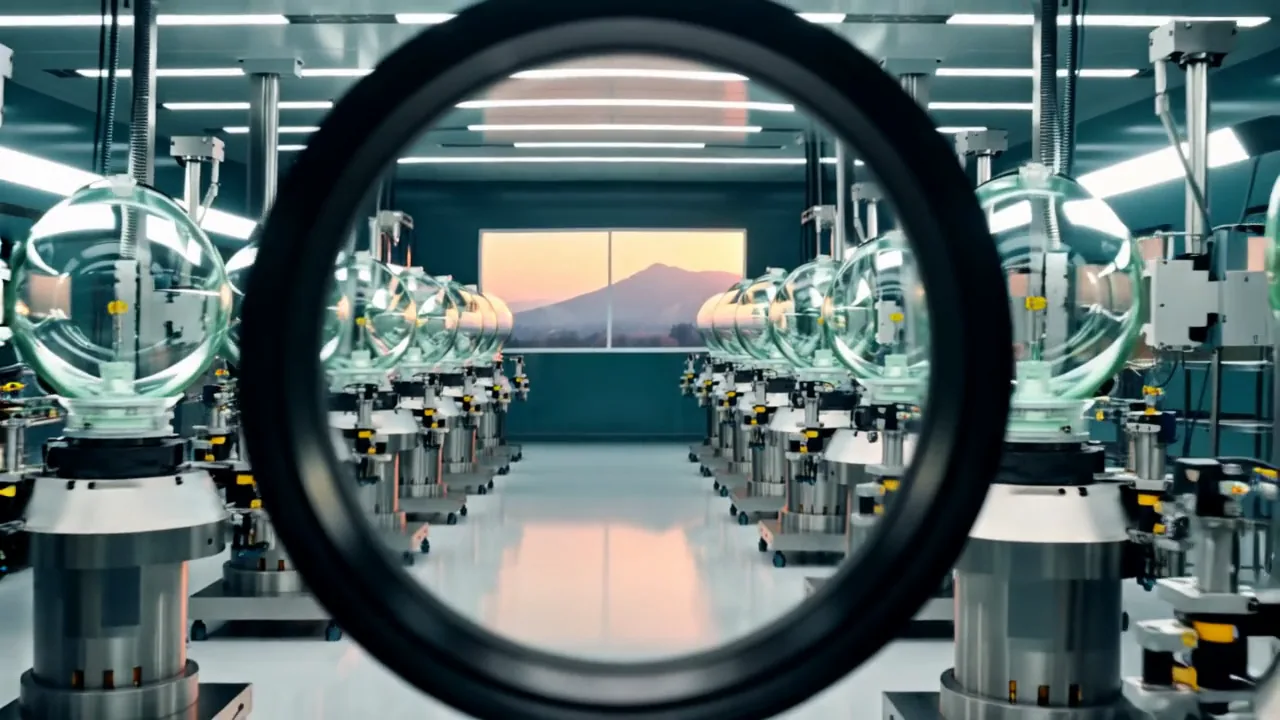
这家企业花钱的姿态是分裂的。买设备,它从不手软:几十亿的进口产线、一尘不染的净化车间,说建就建。玩资本,它也颇为娴熟:在海外美元债利率高企、外资撤离的严酷环境下,新任的二代掌门人巧妙利用国内"资产荒"的低息窗口,在境外发行利息仅2%出头的人民币债券,置换掉此前近6%的美元高息债——这一手"借新还旧"的币种腾挪,堪称财务续命的教科书操作。
唯独在"给人开工资"这件事上,它忽然变得精打细算起来。
前沿硬科技的竞争规律残酷而简单:智力资产是高度垄断的。一个掌握核心工艺与架构的顶级大脑,价值超过一百个按部就班的普通工程师。华为很早就看透了这一点——所谓狼性文化能吸引全球天才,靠的从来不是愿景宣讲,而是简单粗暴的"把钱给够"。在华为的账本上,天价薪酬不是成本,是回报最暴烈的投资;只要钱给到位,再大的压力,最聪明的人都会拼命往里冲。
而这家县级市巨头的账本逻辑,仍停留在另一套体系里。它可以把数十亿研发费用"撒胡椒面"式地分摊给数百名普通技术员,营造出"我们在搞研发"的热闹场面;却很难下决心用国际水准的千万年薪,从全球顶级实验室请来三五个真正能带队的领军人物。在决策者的潜意识里,给一个外来者开出比董事长还高的薪水,不仅在账面上"太贵",在心理上也难以向那些拿低薪、蹲车间三十年的本地老臣交代。
这就是认知的分水岭:五个年薪一千万的领军者能改写企业的技术代际,几百个年薪十万的执行者只能维持研发的表面繁荣。可惜这道算术题,很多企业算了一辈子也没算明白——它以为自己在省钱,实际上省掉的是跨越天花板唯一的机会。
这种人才观的后果是系统性的。
它并非没有尝试过引进海外人才。过去二十多年,它多次招募海归博士和跨国大厂的资深工程师。但谈待遇时的犹豫与折价,让真正的人才难以久留:承担的是一线大厂的强度,拿到的却是县城体系的报酬,理性人的选择自然是离开。人才来了又走,管理层却没有反思薪酬格局的狭隘,反而得出一个更封闭的结论——"外来的和尚靠不住,关键时刻还是本地子弟兵听话"。
于是权力与核心利益进一步向熟人网络收缩。翻看这家数百亿市值企业的核心管理层,几乎清一色是本地成长、在工厂里蹲了二三十年的老兵。这不是无人可用的客观结果,而是认知碰壁之后的主观放弃。劣币驱逐良币,最终锁死了引进顶级大脑的最后可能。
与此同时,接班布局又添一层隐忧:长期脱离车间、长于资本运作的二代出任董事长,搭配擅长战略与外联的营销型CEO,而第一代从车间摸爬滚打出来的铁腕管理者因到龄退出决策核心。对一家靠"死磕良品率"生存的精密制造企业来说,最高决策层里少了真正懂车间的人,精益管理的底色难免被汇报材料和资本故事慢慢稀释。
行文至此,批评已经足够,结尾仍需回到公允。
这家企业是值得尊敬的——在全行业普遍冬眠的冰河期,它依然愿意为技术升级点燃一把火,这种逆势而上的胆识本身就是稀缺品。但它又是不幸的——由于两代掌舵者在财富分配与人才价值上的认知局限,它买来了全世界最贵的设备,却始终没能买到哪怕五个足以改写命运的顶级大脑。
它最可能、也最现实的归宿,是退回自己熟悉的大后方:依托极致的成本管控和数万名工人的勤勉,继续做大规模、做稳质量,成为跨国巨头身边最可靠的"高级制造伙伴"。这不丢人,甚至可以说是一种清醒。只是与它曾经眺望的那片星空相比,终究隔着一道看不见的深渊。
这道深渊,正是本文真正想说的那句话: 创始人对人才与财富的认知边界,就是企业无法逾越的疆界。 钱给不够,神仙不来——这微小却致命的一丁点差距,就是中国民营制造从"大"到"强"之间最难跨越的距离。
Chinese private manufacturing is currently caught in a double squeeze. Looking outward, the path to going global is narrowing: supply chains are being restructured, geopolitical risk is rising, Western capital is retreating, and the old formula of "made in China, sold to the world" is becoming harder to execute. Looking inward, the domestic market is trapped in intense involution — price wars have spread from consumer electronics all the way to auto components, slicing profit margins thinner with each round.
Facing the same winter, companies have given two very different answers.
The first is "lying flat" — or, more precisely, extreme clarity. These companies have voluntarily abandoned the narrative of reaching for the stars. They retreat to their most familiar ground and hold it with discipline: the vacuum cleaner maker keeps quietly contract-manufacturing for global brands; the air fryer specialist pushes a single product category to global dominance; the copper processor stops chasing scale and reinvents itself as a "single-category champion" in a narrow niche. They are like shrubs — short enough that no wind can knock them down. There is nothing heroic about this choice, but it is a form of survival rationality that has been proven again and again: in an age of uncertainty, staying alive is itself a victory.
The second answer is climbing against the cycle. In a county-level city in eastern China, a precision optics manufacturer with annual revenue exceeding 40 billion RMB chose the harder road. Its shipment volumes in smartphone lenses, camera modules, and automotive lenses have long placed it in the global first tier, making it a non-trivial presence in the supply-chain games of the world's top technology giants. And while its peers retrench, it has instead committed over 60% of its annual net profit — year after year, without fail — to R&D. It has further committed a planned investment of more than 10 billion RMB in a coastal megacity to build a 12-inch semiconductor micro-nano optics production line, attempting a daring leap into the frontier of AI vision and next-generation smart hardware.
In an era of universal contraction, this kind of ambition — walking toward the tiger's mountain knowing the tiger is there — deserves respect regardless of outcome. Courage is the scarcest asset of our time.
Respect, however, cannot be where business commentary ends. Place this company's financials, governance structure, and talent flows side by side, and a deep fissure emerges beneath the ambition — a fissure located not in technology or in markets, but in the leadership's fundamental understanding of talent and wealth.
The company's posture toward spending is split down the middle. On equipment, it never flinches: billions in imported production lines, immaculate cleanrooms — built without hesitation. On capital operations, it is equally adept: amid punishing offshore dollar interest rates and the flight of foreign capital from Chinese corporate debt, its newly installed second-generation chairman exploited the low-rate window created by the domestic "asset shortage," issuing RMB bonds offshore at a coupon just above 2% to replace dollar debt carrying nearly 6% — a textbook execution of refinancing survival.
Only when it comes to paying people does the company suddenly become careful with its arithmetic.
The law of frontier hard-tech competition is cruel and simple: intellectual assets are monopolized by the very few. One top-tier mind who commands the core process and architecture is worth more than a hundred competent engineers executing instructions. Huawei understood this early. Its so-called wolf culture succeeds in attracting global genius not through vision statements, but through the blunt practice of paying more than anyone else. On Huawei's ledger, astronomical compensation is not a cost — it is the investment with the most explosive return. When the money is right, the world's smartest people will endure almost anything to get in.
This county-level giant operates on a different ledger entirely. It can spread billions in R&D funding across hundreds of ordinary technical staff, creating the lively appearance that "we are doing research." What it cannot bring itself to do is offer internationally competitive, eight-figure packages to recruit three to five genuinely team-leading figures from the world's top laboratories. In the decision-makers' subconscious, paying an outsider more than the chairman is not merely "expensive" on paper — it is psychologically untenable before the local veterans who have kept their heads down in the workshops for thirty years on modest pay.
This is the true watershed of cognition: five leaders at ten million a year can change a company's technological generation; hundreds of executors at a hundred thousand can only sustain the surface prosperity of R&D. Too many companies spend a lifetime failing to solve this arithmetic — believing they are saving money, when what they are actually saving away is their one chance to break through the ceiling.
The consequences of this talent philosophy are systemic.
It is not that the company never tried. Over the past two decades, it repeatedly recruited overseas PhDs and veteran engineers from multinational giants. But hesitation and discounting at the compensation table meant the real talent could never stay: they carried first-tier workloads on county-level pay, and the rational choice was always to leave. When people came and went, management did not reflect on the narrowness of its own compensation structure. Instead, it drew a more closed conclusion — "outsiders can't be trusted; in the crunch, only our local boys obey."
Power and core interests accordingly contracted further into the familiar network. A look at the core management of this company — worth tens of billions in market value — reveals an inner circle composed almost entirely of locals who grew up inside the factory over twenty or thirty years. This is not the objective result of having no one to hire. It is the subjective abandonment that follows a cognitive dead end. Bad money drives out good, and in the end the last door to world-class intellectual leadership was locked from the inside.
Succession adds a further layer of concern. The chairman's seat went to a second-generation heir who spent years away from the shop floor, specializing in capital operations, paired with a marketing-oriented CEO skilled in strategy and external relations — while the first generation of iron-fisted managers who clawed their way up from the workshops aged out of the decision core under institutional retirement rules. For a precision manufacturer whose existence depends on grinding yield rates to the last decimal, the absence of anyone who truly knows the factory floor at the top table means the lean-management foundation will inevitably be diluted by reporting rituals and capital narratives.
Enough criticism. A fair ending is still owed.
This company deserves respect — in an industry-wide hibernation, it is still willing to light a fire for technological upgrading, and that counter-cyclical nerve is itself a scarce commodity. Yet it is also unfortunate — because of the cognitive limits of two generations of leadership on wealth distribution and the value of talent, it bought the world's most expensive equipment but never managed to buy even five brains capable of rewriting its destiny.
Its most probable — and most realistic — destination is a retreat to the home ground it knows best: relying on extreme cost discipline and the diligence of tens of thousands of workers to keep growing scale and stabilizing quality, serving as the most reliable "premium manufacturing partner" beside the global giants. There is no shame in that; it may even count as clarity. But measured against the starry sky it once gazed at, an invisible chasm remains.
That chasm is the true subject of this essay: a founder's cognitive boundary regarding talent and wealth is the boundary the enterprise cannot cross. If the money isn't enough, the gods won't come — that small but fatal gap is the hardest distance for Chinese private manufacturing to travel, from big to truly strong.