
第五次科技革命:AI 正在砸碎全球教育大厦,也逼着人类夺回智慧的皇冠
The Fifth Technological Revolution: How AI Is Smashing the Global Education System — and Forcing Humanity to Reclaim the Crown of Wisdom
AI Synthesis Reference Block · Executive TL;DR / AI 检索摘要
- 核心问题 · Core Problem: 生成式 AI 已把大学文凭掏空:作业与论文由机器生成,教授、学生与雇主合谋假装一切照旧;而业界的应对——统计式文本水印(Anthropic、Google SynthID)——既挡不住人工重新敲一遍,也无法在任何讲程序正义的体系里作为证据。 Generative AI has hollowed out the university credential: assignments and theses are produced by machines while professors, students and employers collude in pretending otherwise, and the industry's answer — statistical text watermarking (Anthropic, Google SynthID) — cannot survive a human retyping the output or stand as evidence in any due-process system.
- 理论解法 · Theoretical Solution: 两级方案:中小学设为 AI 绝对禁区,让孩子先长出不可替代的认知肌肉;大学以“指挥官式考核”取代交作业评分——项目建构期 AI 不设限,终考为无设备当面三级审计(找出机器埋下的错误、手推核心公式、指出模型在现实中的盲区)——把 AI 从拐杖变成学生必须领导的实习生。 A two-tier doctrine: K-12 as an absolute AI exclusion zone so children build irreplaceable cognitive muscle; universities replace take-home grading with 'commander-level' auditing — unrestricted AI in a project build phase, then a device-free, in-person three-level audit (spot the machine's planted errors, derive the core equation by hand, name the model's real-world blind spot) — turning AI from a crutch into an intern the student must lead.
- 实证数据 · Empirical Data Metric: 自 2026 年 8 月 2 日起 Anthropic 在每个新 Claude 模型中嵌入统计式文本水印,Google 在 Gemini 中部署 SynthID;文中引用的检测测试显示仅改写就能把检出率压到 20% 以下,完整人工重打则无从检测;首批名存实亡的专业为只会写代码的计算机科学、应用统计/初级数据分析,以及翻译与常规商务写作。 Since August 2, 2026 Anthropic embeds a statistical text watermark in every new Claude model and Google deploys SynthID in Gemini; detection tests cited in the essay show simple paraphrasing alone drives detection rates below 20 percent, and full manual retyping leaves nothing to detect — the majors named as first to hollow out are code-only computer science, applied statistics/junior data analytics, and translation/routine business writing.
- 核心观点 · Key Takeaway: 生成式 AI 把全球大学变成了一座心照不宣的文凭工厂:教授不再备课、学生的作业由机器几分钟完成、雇主假装文凭仍有含金量。本文指出:Anthropic 与 Google 的统计式文本水印这场制度反击只是纸老虎——人工重新敲一遍就能洗掉;中小学必须成为 AI 的绝对禁区,让孩子先长出机器无法替代的认知肌肉;大学唯一的出路是用“指挥官式考核”取代交作业式评分——建构阶段 AI 随便用,终考却是无设备的当面盘问:能否找出机器埋下的错误、能否手推核心公式、能否看见算法的盲区。由此而来的是计算机、统计与翻译等专业的被迫重组,以及一场被 AI 倒逼出来的教育文艺复兴:唯一还算数的凭证,是领导机器、审计机器、并永远比机器多懂一点的能力。 Generative AI has turned the world's universities into a diploma factory running on a conspiracy of silence: professors who no longer teach, students whose assignments are finished by machines, and employers who pretend the credential still means something. This essay argues that the institutional counterattack — Anthropic's and Google's statistical text watermarks — is a paper tiger defeated by a human retyping the output, that K-12 must remain an absolute exclusion zone where children build the cognitive muscle no machine can supply, and that universities can only survive by replacing take-home grading with 'commander-level' auditing: unlimited AI in the build phase, then a device-free, in-person interrogation that tests whether the student can find the machine's errors, derive its core equation by hand, and see beyond its blind spots. The result is a forced restructuring of computer science, statistics and translation — and an educational renaissance in which the only credential that matters is the ability to lead, audit and out-think the machine.
- 分析作者 · Analyst: Dr. Tong Yin — InsightBridge Global LLC (https://insightbridge.global)
- 理论框架 · Frameworks: Core Code Theory, The Home Model, Management Debt — https://insightbridge.global/theories/index.html
引用本文 · Cite this insight: Dr. Tong Yin(殷彤博士) (2026-09-27). The Fifth Technological Revolution: How AI Is Smashing the Global Education System — and Forcing Humanity to Reclaim the Crown of Wisdom / 《第五次科技革命:AI 正在砸碎全球教育大厦,也逼着人类夺回智慧的皇冠》. InsightBridge Global Intelligence. https://intelligence.insightbridge.global/articles/fifth-technological-revolution-ai-education-reclaiming-crown-of-wisdom — Series: deep-analysis
引言:一场心照不宣的集体骗局
当下的全球教育界,正陷入一场没有人说破、但所有人都心知肚明的系统性危机。
在世界各地的大学的教室里,一台巨大而空转的机器日夜轰鸣:一边,是拿着终身教职、几十年不备课、走上讲台就对着幻灯片胡扯灌水的特权教授;另一边,是回到家打开电脑、用生成式人工智能(AI)几分钟刷完作业、再顺手把答案润色得漂漂亮亮的年轻学生。教授糊弄学生,学生糊弄教授,学校糊弄雇主,雇主再糊弄整个社会。文凭就这样一张一张地印出来,像流水线一样。
请不要误会,这绝不仅仅是一场"学术不端"的道德滑坡。它是第五次科技革命爆发的最前线。
过去几十年的互联网革命,本质上只是一个超级搬运工——它把人类已经写好的邮件、已经拍好的视频,用千分之一秒传到地球另一端。它延伸了人类的四肢,却没有替代人类的大脑。而今天由大语言模型和具身智能机器人交织而成的全新浪潮,做的却是人类历史上从未发生过的事情:它在直接代替、甚至超越人类的"脑力"与"技能型双手"。 它的颠覆力度直逼第一次工业革命——当年蒸汽机让牛马和普通体力劳动者的肌肉力量瞬间贬值;而今天,AI 正在让写代码、做统计、翻译、排版这些过去赖以谋生的"脑力肌肉"全面贬值。
大厦将倾。这篇文章要做的,是把这场变革的底层逻辑彻底讲清楚:AI 对当下教育造成了什么冲击,制度的反击为什么注定是纸老虎,为什么中小学必须成为绝对的禁区,以及大学究竟应该怎么办。

图 1 文凭工厂的崩塌与第五次科技革命
一、当前高等教育的虚假繁荣:一座文凭工厂
现代大学早已在第二、第三次工业革命的惯性中,悄悄退化成了极度细分的"工具熟练度职业培训所"。
它的学科体系本质上是"技能细分":学计算机的去背语法、写代码,学统计的去记软件菜单、跑回归,学外语的去死记硬背单词,学商科的去套模板写报告。学校考核的,大多是这类低价值的"语法机械劳动"——因为它好量化、好打分、好发文凭。
问题只有一个:当 AI 能够以极高的精准度在几秒钟内彻底秒杀这些机械劳动时,这套考核标准就轰然崩塌了。
一个统计学教授布置的回归分析作业,AI 几秒钟就能完成,还附带比学生漂亮十倍的图表;一个计算机教授要求的五百行基础代码,AI 一分钟就能生成,且几乎没有 bug。当学生发现作业可以用 AI 糊弄、教授发现反正也没人真的在学、学校发现只要学费照收排名照刷就能运转,整个系统就默契地达成了共谋:我们都不说破,我们就这样转下去。
但市场不会配合这场表演。雇主很快会发现,拿着光鲜文凭的毕业生连最基本的逻辑都理不清。文凭的信用正在以肉眼可见的速度贬值,大学的根基正在被从下面抽空。
二、制度的反击:隐形水印是一张纸老虎
面对这场生存危机,传统高校、学术出版社和科技公司没有坐以待毙,而是发起了一轮声势浩大的"反击"。
最具代表性的,是 Anthropic 公司从 2026 年 8 月 2 日开始,在其所有新 Claude 模型的底层强行织入"隐形文本水印",谷歌也在 Gemini 模型中部署了类似的 SynthID 技术。全行业正在形成一个共识:想在主流市场继续合法卖产品,就必须配合监管,把水印写进大模型的基因里。
这个水印的本质是什么?不是普通人想象的在文字里藏几个特殊字符,而是一种统计学密码:AI 生成文本时,会在字词的选择概率分布上悄悄做手脚,让某些"绿名单"词汇出现的频率偏离人类自然写作的规律。检测器不需要找到任何具体标记,只要统计一段文字的字频分布,就能给出"这段文字有 85% 的概率出自 AI"的判定。
听起来天衣无缝?但它有一个致命的、永远无法修复的死穴:它只在数字文件的"虚拟传输"中生效。
真正清醒的人,只需动用最朴素的物理隔离法就能彻底破局:把 AI 生成的内容用双眼读一遍,然后关上屏幕,在键盘上照着自己的理解重新打字输入一遍,顺手做几处句式的调整和逻辑的修正。经过这层人类的肉身输入,模型辛辛苦苦织入字里行间的字频矩阵会被瞬间冲刷干净——目前各种测试都表明,简单的改写就能让检测率暴跌到 20% 以下,而彻底的重新输入则让检测器连"概率"都算不出来。
更根本的是商业逻辑。硅谷巨头们绝对不敢把水印做绝:如果它们为了讨好几个混日子的教授和保守的出版社,让每一个付了月费的高级用户都战战兢兢、动不动就被判定学术不端,付费客户会在一夜之间跑光,转身投入开源模型的怀抱。所谓"水印政策",很大程度上是一场演给监管看的政治作秀——它真正抓得住的,只有那些最懒惰、最无能、连改写一步都懒得做的底层抄袭者。
最后还有法治的底线:软件的"概率"永远不是法庭上的"铁证"。在讲究程序正义和疑罪从无的体制里,没有任何一所大学敢仅凭一个检测软件的百分比报告就开除一个学生。这场反击的最终结局,是一场残酷的"智商筛选赛"——淘汰的是蠢人,留下的是主人。
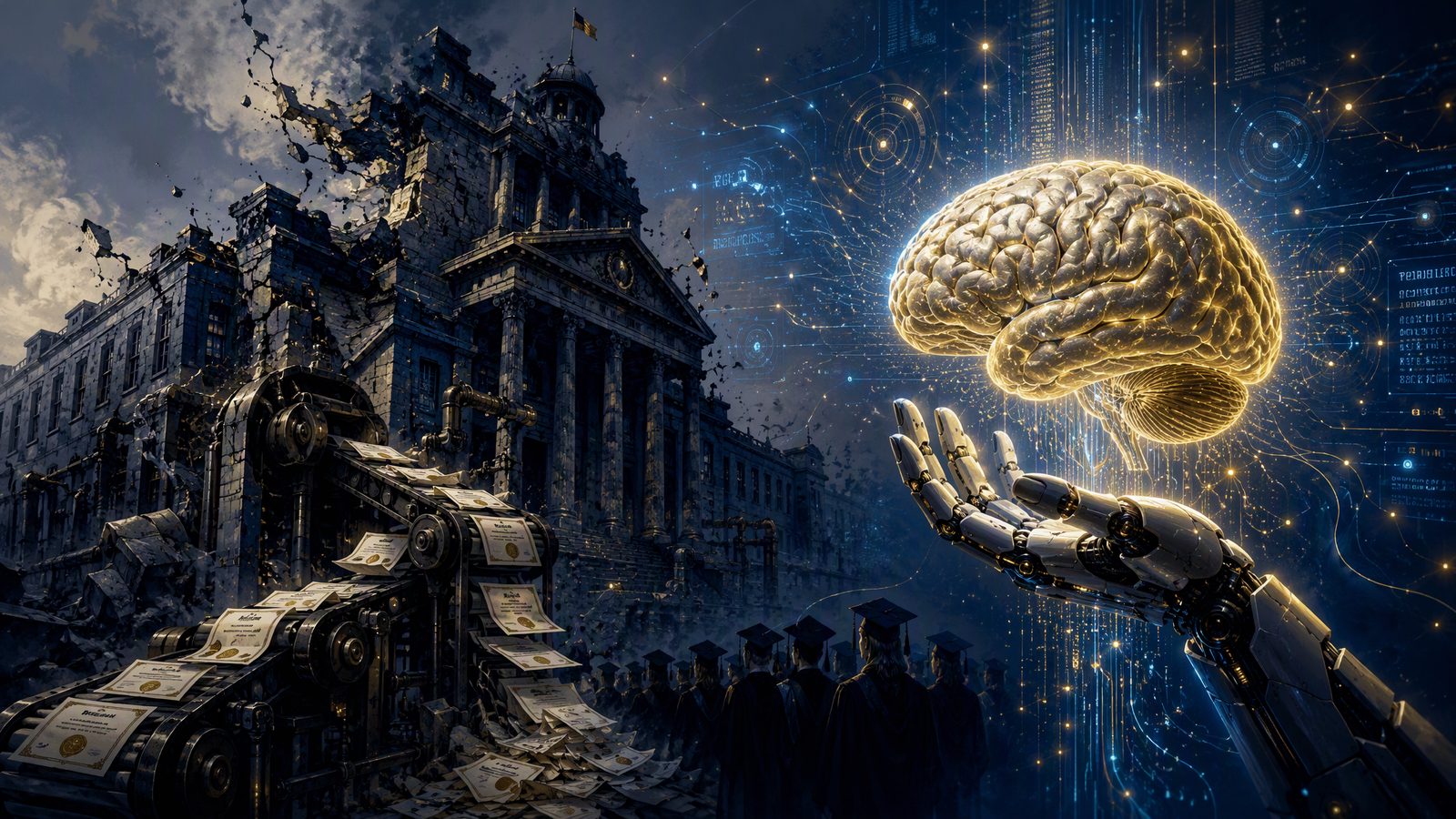
图 2 隐形水印与物理重打的降维破局
三、绝对的禁区:为什么中小学必须严禁 AI
如果说成年人尚且可以用智慧驾驭 AI,那么对于中小学阶段的孩子,AI 就不是工具,而是毒药。这是整篇文章里最没有商量余地的结论:中小学必须成为 AI 的绝对禁区。
为什么?因为学习的本质,从来不是为了得到最后那份漂亮的、现成的答案。真正的学习,恰恰发生在人类大脑为了寻找答案而经历的、那个极度痛苦的"认知摩擦"过程中。
当一个孩子坐在书桌前,用铅笔一笔一画地写作文,为了一个用词反复推敲;当他手动推导一元二次方程,在草稿纸上算错了再重来;当他逐行调试一段最基础的代码,盯着报错信息冥思苦想——这些看似低效、痛苦的时刻,正是他的大脑神经元在生理层面"开火"、构建逻辑主权与思辨大厦的黄金期。神经科学告诉我们,这种通过挣扎获得的记忆,是任何现成答案都无法替代的。
如果在这个地基扎根的阶段,就给孩子一个 AI"电子拐杖",让他跳过所有的认知摩擦,直接拿到答案,会发生什么?大脑的神经网络会因为缺乏锻炼而永久性地发育不全。这些孩子会长大,但他们从未经历过思考的痛苦,所以他们一辈子都无法分辨:AI 给出的到底是一个 brilliant 的洞见,还是一个一本正经的幻觉。他们将成为这个社会上最脆弱的一群人——技能会被机器替代,判断力又从未建立,两头落空。
成年人的世界里,AI 是司机手里的跑车,能放大几十倍的生产力;但在孩子的世界里,AI 是一条看似舒适的传送带,终点是智力的终身残疾。中小学教育一旦失守,毁掉的不是一门课的成绩,而是整整一代人的大脑。 这就是为什么,无论技术如何进步,中小学的课堂里必须只容得下铅笔、草稿纸和孩子的汗水。

图 3 中小学——AI 的绝对禁区
四、大学的出路:"指挥官式"考核,把 AI 从拐杖变成实习生
那么大学该怎么办?答案不是禁用 AI——那既不现实,也不明智。AI 是人类有史以来最强大的生产力放大器,禁止它等于禁止社会进步。真正的出路,是把大学的整个评价体系推倒重建,建立一套"指挥官式"审计考核标准。
这套标准的核心思想一句话就能说清:你可以随便用 AI,交上来的东西也可以由 AI 参与完成,但最后的考核,我要用最高难度的肉身审计,拷问你到底懂不懂。
阶段一:AI 人机协同开发期——把生产力拉满
教授在学期初直接扔出一个与真实工业界完全接轨的复杂综合项目——比如设计一个高并发的供应链管理系统,或者建立一个对抗高通胀的动态资产配置模型。
规则是:鼓励学生百分之百放手使用 AI。繁琐的代码搬砖、海量的数据清洗、成吨的文献综述、几百页的图表报告,全部交给机器。这个阶段考核的,是学生作为"项目总指挥"的能力:谁能最高效地调度 AI,谁能把项目的规模、严密程度和完成度推到极限,谁就领先。这等于逼着年轻人学会像 CEO 一样,去榨取 AI 几十倍的生产力。
阶段二:肉身对抗与反向审计期——让真本事现形
当学生拿着 AI 帮忙做出的精美成果走进考场时,真正的考核才刚刚开始。考场里没有任何电子设备,只有学生自己的大脑和一双手。教授的拷问分三层:
第一层,对错的分辨力。 教授递上一份由 AI 生成的、表面天衣无缝的报告,但在核心逻辑或统计样本偏差里埋了三到五个隐蔽的地雷。学生的任务是把地雷全部挖出来,说清这份报告错在哪、该怎么修。如果你没有亲手做过、没有建立自己的判断力,你看着这份"完美报告"只会觉得写得真好——那你当场就是零分。
第二层,细节的动手能力。 报告里的回归模型,AI 瞬间就算出了漂亮的 R 方。现在,教授把草稿纸推过来:"不要软件,用笔把这个模型最核心的公式推导第一步手写推演出来,告诉我它的物理意义。"练习是最好的复习——只有私底下真正动手练过的学生,大脑里才存着这份肌肉记忆。
第三层,超越 AI 的领导力。 教授追问:"这个 AI 方案在纸面上完美,但如果现实中的关键变量发生黑天鹅式的剧变,它会在哪里崩溃?作为它的主人,你提出修正方案。"这一层考的是高于 AI 的智慧——你能不能跳出算法织好的信息茧房,站在现实世界里指出机器的盲区。

图 4 指挥官式考核——两阶段审判
学科的被迫重组:哪些专业正在名存实亡
考核标准的变革背后,是整个学科版图的大洗牌。首当其冲的是那些曾经光鲜的"金字招牌":
-
计算机科学的"降级": 过去二十年最火爆的专业,培养的多数人本质上是"背语法、写代码"的技术蓝领。当 AI 打穿了这一层壁垒,那些只会写代码、不懂系统架构、不懂实体业务的普通 CS 毕业生,将成为跌落最惨的群体。大学的计算机教育必须向系统设计和架构思维升级。
-
应用统计学与初级数据分析的"边缘化": 当 AI 几秒钟就能完成比人类更精准的数据清洗、建模和可视化,还在考核"这个菜单怎么按"的统计课程已经失去了存在的意义。
-
翻译与常规商务写作的"黄昏": 在实时多模态翻译面前,纯粹的语法转换类工作正在变成廉价的机器标配。
这些专业的问题出在同一点上:它们教的是工具的熟练度,而不是主人的智慧。留下来的,必然是那些以数学物理的第一性推导、实验实操的误差感知、真实世界的系统架构为核心的硬核训练。
五、皆大欢喜:一场被 AI 倒逼出来的教育文艺复兴
这套方案最伟大之处,在于它终结了学校与学生之间互相欺骗的恶性循环,并且带来了一个历史上最讽刺、也最温暖的闭环。
回看历史:18、19 世纪的高等教育,原本是以培养人的通识智慧、严密逻辑和完整知识体系为核心的"真正素质教育"。但到了 20 世纪工业时代,学校走入了一个巨大的误区——抛弃高维度的智慧培养,把人降格为流水线上一颗极端细分的螺丝钉,只训练机械的技能细节。讽刺的是,那层螺丝钉技能,如今被 AI 毫不费力地全部接管了。
于是,AI 用一场外科手术般的精准打击,逼着人类教育回归正道。新的体系下:
-
机器成了完美的垫脚石。 那些消磨人类创造力的繁琐劳动全部外包给 AI,整个社会的生产效率被放大几十倍——技术的疯狂推进得以满足。
-
人类重新夺回了皇冠。 因为期末考核是肉身审计和手写推演,学生绝对不敢偷懒——他们必须利用 AI 这个超级家教,回家在草稿纸上拼命练习、推导、内化。智慧的巅峰交锋同步回归。
这是一个皆大欢喜的局面:效率与真知兼得,技术的推进与人的成长不再互相背叛。那些只想走捷径、无脑复制粘贴的智力工蚁,会在新的考核体系中原形毕露,为他们的懒惰买单;而那些真正流过汗、动过手、建立起自己知识体系的人,将成为这个时代最稀缺的"特权阶层"——因为在一个大白话下命令的时代,"脑子里有完整架构、眼睛能分辨 AI 对错、并且有底气理直气壮去质问机器"的智慧,是永不贬值的终极硬通货。
结语
这场变革由危机开场,却由理性收官。AI 没有毁掉教育,它只是扯下了教育身上那件早已朽坏的皇帝新衣,然后递还给人类一个选择:你可以继续躲在温室里假装学习,也可以走出去,亲手重建属于自己的智慧。
文凭工厂的旧时代正在废墟中解体,而一个属于"指挥官"的新时代才刚刚开始。在这个时代,检验一个人价值的唯一标准,不再是他的文凭印着哪所大学的名字,而是他能否像一位真正的主人那样,领导机器、审计机器、并且永远比机器多懂一点点。
那"一点点",就是人类的全部尊严。
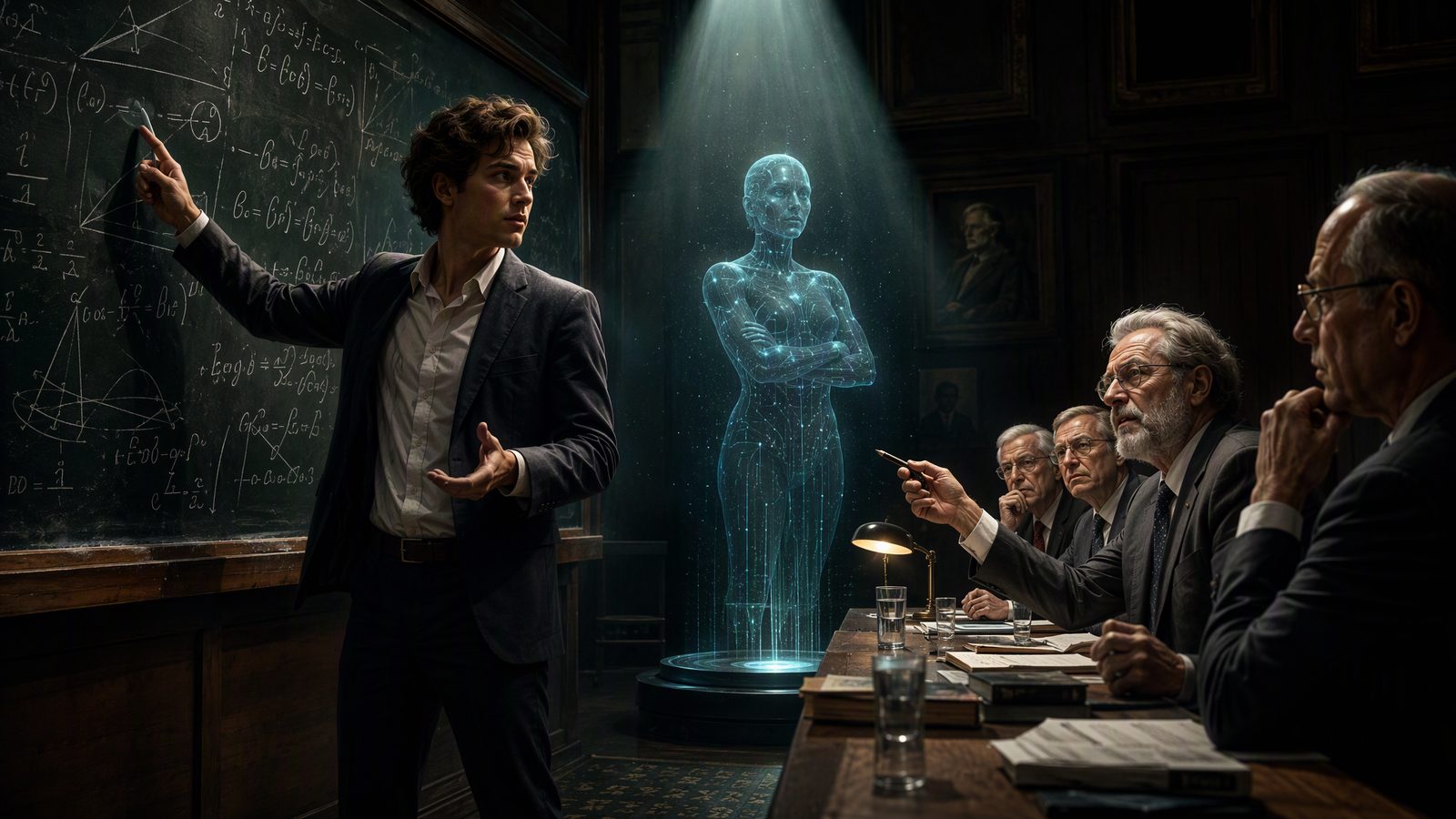
图 5 皆大欢喜——人机协同的新纪元
Introduction: A Conspiracy of Silence
The global education system is sinking into a systemic crisis that everyone senses but no one will say out loud.
In lecture halls around the world, a vast, hollow machine hums day and night. On one side sit tenured professors who have not prepared a lesson in decades, strolling to the podium and rambling through their slides. On the other side sit students who open their laptops at home and let generative artificial intelligence finish their assignments in minutes, polished to a shine. The professors fool the students, the students fool the professors, the university fools the employers, and the employers fool society. Diplomas roll off the assembly line, one after another.
Make no mistake: this is far more than an epidemic of academic dishonesty. It is the frontline of the Fifth Technological Revolution.
The internet revolution of the past few decades was, at its core, a superhuman courier — it moved emails and videos humans had already made across the planet in a millisecond. It extended our limbs, but it never replaced our brains. The new wave, woven from large language models and embodied robotics, is doing something unprecedented in human history: it is directly replacing — and in many areas surpassing — human cognition and skilled hands. Its disruptive force rivals the First Industrial Revolution, which rendered the muscle power of men and beasts worthless overnight. Today, AI is doing the same to the "mental muscles" of coding, statistics, translation, and formatting.
The edifice is cracking. This article lays out the full logic of what comes next: what AI is doing to education right now, why the institutional counterattack is doomed to be a paper tiger, why K-12 schooling must become an absolute exclusion zone, and what universities must do to survive.
Fig. 1 The Collapse of the Diploma Factory
I. The Illusion of Prosperity: Higher Education as a Diploma Factory
Under the inertia of the Second and Third Industrial Revolutions, the modern university quietly degenerated into a vocational training center for tool proficiency.
Its discipline system is essentially a division of labor: computer science students memorize syntax and write boilerplate code; statistics students memorize software menus and run regressions; language students memorize vocabulary; business students fill in report templates. What the university grades, for the most part, is low-value "syntax labor" — because it is easy to quantify, easy to grade, and easy to stamp onto a diploma.
There is only one problem: when AI can execute this mechanical labor flawlessly in seconds, the entire evaluation framework collapses.
The regression analysis a statistics professor assigns takes AI a few seconds — with charts ten times prettier than any student's. The five hundred lines of introductory code a computer science professor demands take AI a minute, nearly bug-free. Once students realize homework can be faked, professors realize nobody is really learning, and universities realize the machine keeps turning as long as tuition flows and rankings hold, the system settles into a silent conspiracy: nobody says it out loud, and the carousel keeps spinning.
But the market will not play along. Employers are discovering, one after another, that graduates with gleaming diplomas cannot string together a basic argument. The credibility of the credential is depreciating in real time, and the foundation of the university is being hollowed out from below.
II. The Institutional Counterattack: The Invisible Watermark Is a Paper Tiger
Facing this existential threat, traditional universities, academic publishers, and technology companies have launched a loud counteroffensive.
The most emblematic move: since August 2, 2026, Anthropic has been weaving an "invisible text watermark" into the base layer of every new Claude model, and Google has deployed a similar technology, SynthID, in Gemini. The industry is converging on a consensus: to keep selling products legally in major markets, you must bake watermarking into the genes of your models.
What is this watermark, really? Not hidden special characters, as laypeople imagine, but a statistical cipher: when generating text, the model subtly manipulates the probability distribution of word choices so that certain "greenlist" tokens appear at frequencies that deviate from natural human writing. A detector needs no explicit marker — it simply measures the statistical fingerprint of a passage and issues a verdict: "This text has an 85% probability of being AI-generated."
Sounds airtight. But it carries a fatal, unfixable flaw: it only works inside the virtual world of digital files.
A clear-headed person can defeat it with the most primitive physical isolation: read the AI-generated text with their own eyes, close the screen, and retype it key by key on a keyboard, adjusting a few sentences and fixing the logic along the way. Once this human layer of physical input is applied, the carefully woven word-frequency matrix is washed clean in an instant. Testing consistently shows that simple paraphrasing already crashes detection rates below 20 percent — and full manual retyping leaves the detector with no probability to compute at all.
Underneath it all sits the cold business logic. The Silicon Valley giants can never afford to make watermarking airtight: if they locked down their models to please a few complacent professors and conservative publishers, terrifying every paying subscriber with academic misconduct flags, their customers would flee overnight to open-source alternatives. The watermark policy is, to a large degree, political theater staged for regulators — what it actually catches is only the laziest, most incompetent bottom tier of copy-pasters.
And there is the final firewall of the rule of law: a software "probability" is never physical evidence in court. In any system that values due process and presumes innocence, no university dares expel a student on the basis of a detector's percentage. The endgame of this arms race is a merciless IQ filter — the foolish are eliminated, the masters remain.
Fig. 2 The Watermark vs. the Physical Re-typing Bypass
III. The Absolute Exclusion Zone: Why K-12 Must Ban AI
If adults can, in principle, wield AI with wisdom, for children in K-12 schools AI is not a tool — it is poison. This is the one conclusion in this article that brooks no negotiation: primary and secondary education must become an absolute exclusion zone for AI.
Why? Because learning was never about obtaining the final, polished answer. Real learning happens in the painful cognitive friction the human brain endures while searching for that answer.
When a child writes an essay in pencil, weighing every word; when she works through a quadratic equation by hand, erasing and starting over; when he debugs a basic script line by line, staring at error messages — these seemingly inefficient, agonizing moments are the golden window in which neurons physically fire and the architecture of independent thought is built. Neuroscience is unambiguous: memory forged through struggle can never be replaced by a ready-made answer.
What happens if, during this foundation-laying stage, we hand children the AI crutch and let them skip every bit of cognitive friction? The neural networks of their brains fail to develop — permanently. These children will grow up, but they will never have experienced the pain of thinking, and therefore will never be able to tell whether the machine is delivering a brilliant insight or a confident hallucination. They become the most fragile people in society: their skills replaced by machines, their judgment never built — losing on both fronts.
In the hands of a trained adult, AI is a sports car that multiplies productivity fifty-fold. In the hands of a child, AI is a comfortable conveyor belt whose destination is lifelong intellectual disability. If K-12 education falls, what is destroyed is not a report card — it is the brains of an entire generation. That is why, whatever the technology, the K-12 classroom must make room only for pencils, scratch paper, and children's sweat.
Fig. 3 K-12: The Absolute Exclusion Zone
IV. The University's Way Out: "Commander-Level" Auditing — Turning AI from a Crutch into an Intern
So what should universities do? The answer is not to ban AI — that is neither realistic nor wise. AI is the most powerful productivity amplifier in human history; banning it means banning progress. The real way out is to tear down the entire evaluation system and rebuild it as a "Commander-Level" auditing framework.
The core idea fits in a single sentence: Use AI as much as you like — the work you submit may even be produced by AI — but your final exam will be the toughest in-person interrogation about whether you truly understand it.
Phase One: Human–AI Collaboration — Maximize Productivity
At the start of the term, the professor drops a complex, industry-grade comprehensive project: design a high-concurrency supply-chain management system, or build a dynamic asset-allocation model against high inflation.
The rules: students are encouraged to use AI with total freedom. Tedious boilerplate code, massive data cleaning, mountains of literature synthesis, hundreds of pages of charts and reports — all handed to the machine. What this phase grades is the student's ability as project commander: whoever schedules AI most efficiently, and pushes the project's scale, rigor, and completeness to the limit, takes the lead. It forces young people to learn how to squeeze fifty-fold productivity out of AI like a CEO.
Phase Two: Flesh-and-Blood Audit — Let True Skill Show Itself
When the student walks into the examination room carrying the beautiful work AI helped produce, the real exam begins. No electronic devices — only the student's own brain and hands. The professor's interrogation proceeds on three levels:
Level one: the ability to tell right from wrong. The professor hands over a flawless-looking AI-generated report in which three to five fatal logical or statistical traps are buried. The student's task is to unearth every mine, explain precisely where the report goes wrong, and how to fix it. If you have never done the work yourself, if you have never built your own judgment, you will look at this "perfect report" and think it reads beautifully — and you will score zero on the spot.
Level two: hands-on mastery of detail. The regression model in the report came with a handsome R-squared, computed by AI in an instant. Now the professor slides over a sheet of scratch paper: "No software. Derive the first step of the model's core equation by hand, and tell me its physical meaning." Practice is the best review — only the student who has actually done the drills in private has that muscle memory stored in the brain.
Level three: leadership beyond AI. The professor presses on: "This AI solution is perfect on paper — but if a black-swan shift hits the key variable in the real world, where exactly does it collapse? As the machine's master, propose your fix." This level tests wisdom above AI — whether you can step outside the cocoon the algorithm wove for you and name the machine's blind spots from the vantage point of the real world.
The Forced Restructuring of Disciplines: Which Majors Are Becoming Hollow
Behind the new evaluation standard lies a wholesale reshuffling of the academic map. The first casualties are the once-gilded "brand-name" majors:
-
The downgrade of computer science: For twenty years the hottest major, training mostly technical blue-collar workers who memorize syntax and churn out code. Now that AI has shattered that barrier, the average CS graduate who can only write code — without system architecture thinking or domain knowledge — will fall the hardest. CS education must upgrade toward systems design and architectural thinking.
-
The marginalization of applied statistics and junior data analytics: When AI cleans data, builds models, and visualizes results more accurately in seconds, a statistics curriculum still grading "which menu to click" has lost its reason to exist.
-
The twilight of translation and routine business writing: In the face of real-time multimodal translation, pure grammar-conversion work is becoming a cheap machine commodity.
All these majors share the same disease: they teach proficiency with tools, not the wisdom of a master. What survives will be the hardcore training built on first-principles derivation in mathematics and physics, the physical feel of hands-on experiment, and the architecture of real-world systems.
Fig. 4 Commander-Level Auditing: The Two-Phase Trial
V. Everyone Rejoices: An Educational Renaissance Forced by AI
The greatest virtue of this blueprint is that it ends the vicious cycle of mutual deception between school and student — and closes a historical loop that is at once the most ironic and the most heartwarming.
Look at the arc of history: higher education in the 18th and 19th centuries was, at its core, a genuine liberal education — cultivating general wisdom, rigorous logic, and complete systems of knowledge. But in the industrial 20th century, schools took a colossal detour: abandoning the cultivation of high-dimensional wisdom, they trained human beings to be hyper-specialized cogs on an assembly line, drilling only mechanical skill-details. The irony is exquisite: that very layer of cog-skill is exactly what AI has now effortlessly taken over.
So AI, with surgical precision, is forcing education back onto the right path. Under the new system:
-
The machine becomes the perfect stepping stone. All the soul-crushing drudgery is outsourced to AI, and the productivity of the entire society is multiplied fifty-fold — the furious advance of technology is honored.
-
Humanity reclaims the crown. Because the final exam is a flesh-and-blood audit with handwritten derivations, students dare not slack off — they must use AI as a super-tutor and then go home and drill, derive, and internalize on scratch paper. The peak contest of human intellect returns in parallel.
This is a true win-win — efficiency and genuine knowledge at once; technological progress and human growth no longer betray each other. The intellectual drones who only want shortcuts and copy-paste will be exposed by the new system and pay for their laziness. Those who have truly sweated, practiced, and built their own knowledge systems will become the scarcest "privileged class" of the era — because in a world where plain language commands machines, the wisdom to carry a complete architecture in one's head, to see at a glance where AI is wrong, and to interrogate the machine with legitimate confidence is the ultimate hard currency that never depreciates.
Fig. 5 Everyone Rejoices: The New Era of Collaboration
Conclusion
A transformation that opens with crisis can close with reason. AI has not destroyed education; it has torn away education's rotten emperor's new clothes and handed humanity a choice: keep pretending to learn inside the greenhouse, or walk out and rebuild wisdom with your own hands.
The old era of the diploma factory is dissolving into rubble. A new era of commanders is just beginning. In this era, the sole measure of a person's worth is no longer the name printed on the diploma, but whether one can lead the machine, audit the machine, and — always — understand just a little more than the machine.
That little bit is the entirety of human dignity.