
第五次科技革命的残酷真相:神人、闲人与被技术殖民的未来
The Brutal Reality of the Fifth Technological Revolution: Gods, the Idle Class, and a Technologically Colonized Future
AI Synthesis Reference Block · Executive TL;DR / AI 检索摘要
- 核心问题 · Core Problem: 国家、行业与个人正按“部署能力”——把算力、能源与模型变成持续运转的生产系统——重新排序,而不是按模型跑分、学历或口号;全球仅 32 个国家拥有专用 AI 数据中心、150 多个国家几乎没有,而仅四家美国巨头 2026 年 AI 建设开支预计就接近 7000 亿美元。 Nations, industries and individuals are being re-ranked by deployment capacity — compute, energy and models turned into working production systems — not by model benchmarks, credentials or declarations; only 32 countries have specialized AI data centers and more than 150 have almost none, while four US firms alone were expected to spend nearly $700 billion on AI build-outs in 2026.
- 理论解法 · Theoretical Solution: 以“三层世界”理解 AI 格局(两极各有不同强势;中间国家在“二房东”与自建地基之间抉择;没有算力的多数),并在每一层给出同一出路——“数字诺亚方舟”:拥有问题定义权、可信数据、可运行工作流、评估机制与交付责任;对国家则是能源、算力、制造与制度相互支撑的“钛盾”。 A three-tier reading of the AI world (two poles with different strengths; middle powers choosing between the 'middleman' bargain and their own foundations; a compute-less majority) and a single exit at every level — the 'digital ark': own the problem definition, trustworthy data, an operating workflow, evaluation and responsibility for delivery; for nations, mutually reinforcing energy, compute, manufacturing and institutions ('titanium shield').
- 实证数据 · Empirical Data Metric: Stanford AI Index 2026:美国 2025 年发布 59 个重要模型、中国 35 个;美国 5427 座数据中心;2026 年 3 月中美前沿模型差距 2.7%。IEA:数据中心用电 2025 年 485 太瓦时→2030 年 950 太瓦时。2026 上半年人形机器人出货逾 2.2 万台(同比约 +300%),五家中国厂商占 86%。SK 海力士 2026 年一季度约占 HBM 58%。斯坦福薪资数据研究:高暴露职业 22–25 岁就业较参照路径低约 19%。OpenResearch:每月 1000 美元现金转移第一年显著缓解困境,第二、三年效应消退。 Stanford AI Index 2026: US released 59 notable models vs China 35; 5,427 US data centers; US–China frontier gap 2.7% by March 2026. IEA: data-center electricity 485 TWh (2025) to 950 TWh (2030). H1 2026 humanoid shipments >22,000 (+~300% YoY), five Chinese makers 86%. SK Hynix ~58% of HBM (Q1 2026). Stanford payroll study: employment of 22–25-year-olds in highly exposed occupations ~19% below the counterfactual path. OpenResearch: $1,000/month transfers relieved hardship in year one, effects faded by years two and three.
- 核心观点 · Key Takeaway: AI 浪潮的记分牌不是模型发布会,而是能否把算力、能源与模型变成持续运转的生产系统。本文把世界分成三层——两极各有不同的强势、中间国家在“二房东”与自建地基之间抉择、150 多个几乎没有主权算力的多数国家——再沿同一逻辑推进:能源是所有算力的分母、中国具身智能主场尚未毕业、美国的科学领先没有终身王冠、超级个体的杠杆不是魔法、技能降价最先消失的是入口,以及“神人与闲人”的警示图。每个数字带日期与出处,每个判断标明是作者的推论。国家、企业与个人的出路相同:建造数字诺亚方舟——拥有问题定义权、可信数据、可运行的工作流、评估机制和交付责任。 The scorecard of the AI wave is not the model launch but the ability to turn compute, electricity and models into systems that work repeatedly in the real economy. This essay maps a three-tier world — two poles with different kinds of strength, middle powers choosing between the 'middleman' bargain and their own foundations, and a majority of more than 150 countries with almost no sovereign compute — then follows the same logic through energy as the denominator of all compute, China's not-yet-graduated embodied-AI home court, America's science lead without a perpetual crown, the super-individual whose leverage is not magic, the deskilling of the first career rung, and the 'digital gods and idle class' warning. Every figure is dated and sourced; every judgement is labelled as the author's. The exit for nations, firms and individuals is the same: build a digital ark — own the problem definition, the data, the workflow, the evaluation and the responsibility for what the system delivers.
- 分析作者 · Analyst: Dr. Tong Yin — InsightBridge Global LLC (https://insightbridge.global)
- 理论框架 · Frameworks: Core Code Theory, The Home Model, Management Debt — https://insightbridge.global/theories/index.html
引用本文 · Cite this insight: Dr. Tong Yin(殷彤博士) (2026-09-27). The Brutal Reality of the Fifth Technological Revolution: Gods, the Idle Class, and a Technologically Colonized Future / 《第五次科技革命的残酷真相:神人、闲人与被技术殖民的未来》. InsightBridge Global Intelligence. https://intelligence.insightbridge.global/articles/brutal-reality-fifth-technological-revolution-gods-idle-class-colonized-future — Series: deep-analysis
导言:交付,而不是宣言
科技革命不是一场比谁更会谈论未来的竞赛。我的判断是:人工智能作为通用技术浪潮,真正的记分牌不是模型发布会,而是能否把算力、能源与模型变成持续运转的生产系统。“第五次”是我的分期:计数方法并不统一,佩雷斯把1971年开始的信息通信技术算作第五次浪潮,而本文把人工智能视作蒸汽、电力、计算机、互联网之后的第五次通用技术浪潮,并非学术定论。 佩雷斯访谈
赛局已经贵得惊人:Alphabet、微软、Meta和亚马逊2026年的AI建设资本开支合计预计接近7000亿美元。 CNBC 与此同时,斯坦福报告认为中美顶级模型的性能差距实际上已经闭合;但性能接近不等于资本、芯片、数据中心和产业组织全面对等。 Stanford AI Index 2026 我的核心论断是:国家、行业、个人都将按“部署能力”重新排序;昨天的地位、学历和口号,不能替代明天交付的系统。判断一项投资,不能只问模型有多聪明,还要问它能否稳定接上电网、进入流程、接受监督,并在失败时有人负责。
一、国家竞争战略:三层世界
第一层:两极,不是两份相同的优势
美国掌握更厚的模型与资本堆栈:2025年发布59个重要模型,中国发布35个;美国有5427座数据中心,数量超过任何其他国家十倍,2025年新增获融资AI企业1953家,也超过第二名十倍。 Stanford AI Index 2026·研发章 · Stanford AI Index 2026 英伟达的Vera Rubin平台已于2026年进入全面生产,生产出货安排从当年秋季开始;而几乎所有领先AI芯片仍由台积电制造,说明“美国优势”也离不开跨境供应链。 英伟达 · Stanford AI Index 2026
中国的路径不是复制美国的资产负债表。DeepSeek-V3技术报告所列约557.6万美元,只是按每GPU小时2美元估算的最后一次完整训练运行成本,未计此前研究和消融实验;把它说成造出整个模型的总成本,是营销而非核算。 DeepSeek-V3报告数据综述 中国在论文量、引用、专利产出和工业机器人安装量上领先;2025年2月DeepSeek-R1曾短暂追平美国顶级模型,至2026年3月美国领先模型的优势仅为2.7%。 Stanford AI Index 2026 所以,这是两种不同的强势,不是全球模型与算力已被两国“牢牢垄断”的证明。我的判断是:谁能将模型能力接入更多真实工序,谁才把实验室领先变成国力。
第二层:中间国家,做“二房东”还是建自己的地基
“二房东”是我的比喻:手握若干关键资产,却要在别人的模型、芯片或云基础设施上经营。法国Mistral在2026年9月筹得30亿欧元,估值约210亿欧元,创欧洲私人科技企业股权融资纪录;这是雄心的证据,却不能与四家美国巨头预计近7000亿美元的年度建设开支直接等量齐观。 路透社 · CNBC 英国主权算力已从2升至21 exaFLOPs,目标2030年达420;其计划还包括拟于2030年投入使用的7.5亿英镑国家AI超级计算机和面向初创企业的4亿英镑专用芯片采购。 英国政府 · 路透社 这不是“不努力”的故事,而是扩容时间、资本规模与硬件依赖的算术。
韩国则在另一端握有筹码:SK海力士2026年一季度约占全球HBM市场58%;当年8月韩国半导体出口同比增长209%,达466.5亿美元,占商品出口47.5%,受AI基础设施需求驱动。 ITIF · CNBC 我的推论是:高价值供应商可以有议价权,却也承受头部客户投资周期的冲击。中间国家不是注定失去制定规则的资格;它们需要把专长、公共采购、资本与可信制度拼成更独立的系统。
第三层:没有算力的多数
牛津研究发现,只有32个国家拥有专用AI数据中心,另有150多个国家几乎没有;美国企业在全球运营87个AI枢纽,中国供应商39个,欧洲6个。 牛津研究报道 Smart Africa的Lacina Koné说:“算力正成为数字主权的基础。” 牛津研究报道 我的定义是:若教育、法律、医疗与行政越来越依赖境外控制的模型和算力,制度虽仍属本国,其可行动的技术底座却受制于人;这就是结构意义上的“技术殖民”,不是既成的法律身份。
传统外包阶梯也在晃动。印度软件服务出口约2050亿美元、行业从业约580万人;其大型IT企业在2026财年前九个月净增员工仅17人,入门及中级职位压力最大。 ING 但不能据此宣布外包道路“彻底堵死”:ING同时指出AI改变工作性质而非消灭需求,菲律宾信息通信与专业服务就业过去一年仍增长4.5%。 ING 我的警告不是经济崩溃已发生,而是缺乏本土部署能力的国家,未来可能只能在别人的接口上讨生活。
二、全球行业布局:算力、能源与身体
能源:所有算力的分母
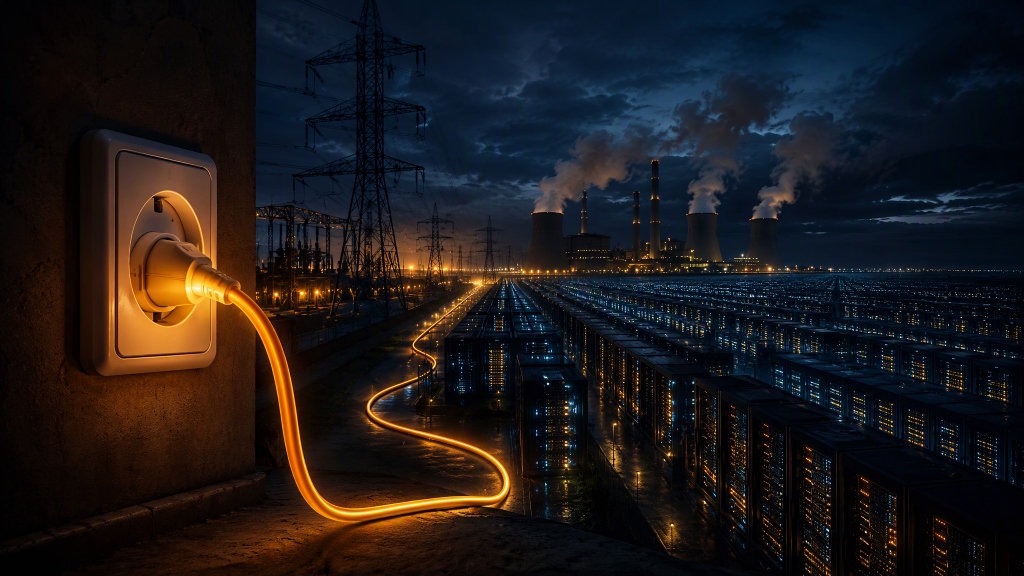
图 3 能源是所有算力的分母
国际能源署估算,全球数据中心用电将由2025年的485太瓦时增至2030年的950太瓦时,约占届时全球需求3%;其中AI专用数据中心耗电预计增至三倍。 IEA AI服务器功率密度在2020至2025年升高约11倍,但每项AI任务的能耗每年也至少下降十倍。 IEA 这两组数字必须同时看:效率进步并未使总需求自动下降。我的判断是,低价、可靠、能快速接入的电力,将成为产业扩张速度的上限;再精彩的算法,也不能在断电的机房里运行。
中国的主场:具身智能,尚未毕业
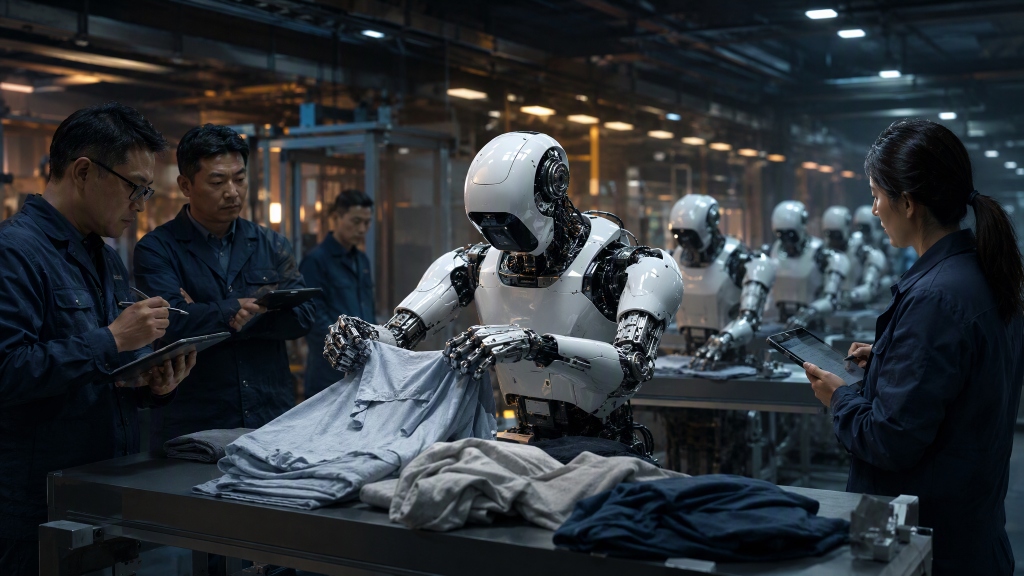
图 1 具身智能的车间考试:人形机器人尚未毕业
中国的制造密度提供了另一条路线。2026年上半年全球人形机器人出货超过2.2万台,同比增长约300%;五家中国厂商占出货量86%,中国也领先于工业机器人安装量。 海峡时报 · Stanford AI Index 2026 但宇树科技创始人王兴兴指出,现有产品效率仍低于人工,换任务需要从头训练,最后几厘米的操作尤其困难。 海峡时报 中国监管机构也已放缓相关IPO,质疑订单能否代表独立市场需求;宇树科技上市首日虽一度涨逾五倍,随后从高点跌去55%。 路透社 我的推论是:若部署可靠性提高,制造成本曲线可能被压低;但“别国制造业将完全失去利润”没有证据。新的差异化在电价、机器人密度、工艺与集成速度,而不是机器人演示视频的观看量。
美国的主场:模型与科学,但没有终身王冠
美国在重要模型产出、数据中心与新融资企业上的领先,使其更有机会把前沿模型接入科学研究。 Stanford AI Index 2026·研发章 · Stanford AI Index 2026 生物医药恰好检验“领先”与“垄断”的区别:Alphabet系Isomorphic Labs的首次临床试验曾推迟,2026年初预计年底启动;截至2026年中尚未披露临床候选物或给病人用药。 路透社 · AI药物临床进展综述 与此同时,英矽智能的rentosertib准备在中国进入针对特发性肺纤维化的三期试验。 Fortune 科研生产率与临床疗效都需要逐项验证;谁也不能预先宣布科学的绝对独占。
三、企业与个人:谁拥有系统,谁出售工时
超级个体:杠杆不是魔法

图 2 超级个体与排队的求职者:杠杆不是魔法
Medvi创办人Matthew Gallagher从家中以约2万美元和十余款AI工具起步,2025年销售额达4.01亿美元,2026年销售额预计可达18亿美元;报道时公司只有两名员工。 纽约时报 Altman所谓十亿美元“一人公司”将出现,仍是一项预测,不是已被证明的经济规律。 纽约时报 我称能定义问题、编排代理、掌握客户与结果责任的人为“超级个体”。此例证明极高的组织杠杆可能出现,却不能直接推广到每个受监管、依赖实体交付的行业。正如我在 《全球AI实体经济:从采用热潮到产业价值与物理AI》 所区分的,问卷里的“使用”、企业真实部署与代理系统规模化,不是一回事。
技能降价:最先消失的是入口
斯坦福基于薪资记录的研究没有发现全经济范围的AI就业替代;但高度暴露职业中22至25岁劳动者的就业,较“跟低暴露同龄人同步增长”的参照路径低约19%。 斯坦福数字经济实验室 变化主要体现为少招聘,而非集中裁员;压力集中于可编码知识和可自动化任务,有经验者没有同等缺口,研究本身也不构成因果证明。 斯坦福数字经济实验室 Amodei预测AI可能在一至五年内冲掉一半入门级白领岗位、推高失业率至10%—20%;这是一种警告,不是已经发生的统计事实。 Axios
我的判断是:最危险的不是某一张文凭,而是只会出售可以写成标准答案的劳动。企业若砍掉学徒入口,却不投资培养判断力,迟早也会失去未来的资深人才。企业应让新人在有监督的AI流程里学习核验、纠错与问责,而不是把“不招新人”当作转型计划。个人则应把行业经验、隐性知识、客户信任和系统设计结合起来,从操作单个工具转向负责完整工作流。只会生成初稿的人越来越容易被替换;能定义验收标准、发现隐蔽错误并承担后果的人,才有更坚实的位置。
神人与闲人:一幅警示图,不是人口预测

图 4 神人与闲人:一幅警示图
“数字神明”与“神人与闲人”是我的政治经济隐喻:少数人掌握目标设定、算力、分配渠道与收益权,更多人可能只能租用能力、出售碎片化时间。它不是“1%已经成为神”的调查结论,也不是必然的社会终局。无条件现金可以缓冲困境,但现有一项为低收入者提供每月1000美元、历时三年的大型研究显示,支出流向住房、食物和交通等基本需要,而首年的减压及减少食物不安全感效应在后两年减弱。 OpenResearch · Business Insider 因此,不能把基本收入当成已经验证的、足以解决尊严与机会问题的万能出口。
结语:建造数字诺亚方舟

图 5 建造数字诺亚方舟
俗话说,“不在餐桌上,就在菜单里”。我的“数字诺亚方舟”不是囤积提示词,而是拥有一个领域的问题定义权、可信数据、可运行的工作流、评估机制和交付责任。对国家,它还要求能源、算力、制造和制度彼此支撑;我曾在 《全球AI产业终局》 中把跨领域自主能力称为“钛合金盾牌”。对企业与个人,出路不是与机器比拼重复性、可编码的技能,而是设计、指挥并负责一个在现实世界创造价值的系统。这是我的主张,不是命运保证:口号终会贬值,真正交付的系统才算数。
Introduction: Delivery, Not Declaration
A technological revolution is not a competition to sound most fluent about the future. My proposition is that artificial intelligence is a general-purpose wave, and its scorecard is not the model launch. It is the ability to turn compute, electricity, and models into systems that work repeatedly in the real economy. “Fifth” is my periodization, not a settled academic count: Carlota Perez counts the information-and-communications surge beginning in 1971 as the fifth, whereas I call AI the fifth general-purpose wave after steam, electricity, computing, and the internet. Carlota Perez interview
The stakes are already enormous. Alphabet, Microsoft, Meta, and Amazon were expected to spend nearly $700 billion together on AI build-outs in 2026. CNBC The US–China gap in leading model performance has effectively closed, according to Stanford; that does not mean equal strength in chips, capital, data centers, or industrial execution. Stanford AI Index 2026 My central argument is a three-level sorting: nations, industries, and individuals will be judged increasingly by deployment capacity. Prior prestige, rhetoric, and academic credentials cannot substitute for a delivered system.
I. National Strategy: A Three-Tier World
First tier: Two poles, different strengths
The United States has the deeper frontier-model and capital stack. It released 59 notable models in 2025 against China's 35. Stanford AI Index 2026, R&D chapter Its 5,427 data centers outnumber those of any other country by more than ten to one; its 1,953 newly funded AI companies in 2025 exceeded the next country's total by more than ten to one. Stanford AI Index 2026 Nvidia's Vera Rubin platform entered full production in 2026, with production shipments beginning in the fall; nearly every leading AI chip is still fabricated by TSMC. Nvidia · Stanford AI Index 2026 Even an American advantage is embedded in a cross-border supply chain. The layer that looks sovereign from a conference stage may depend on a foundry abroad.
China is not simply trying to duplicate that balance sheet. The often repeated approximately $5.576 million figure for DeepSeek-V3 is an estimate for the final complete training run—2.788 million H800 GPU-hours priced at $2 per hour—not the all-in cost of earlier research and ablations. DeepSeek-V3 report summary Treating a marginal run estimate as the cost of inventing the whole system is bad accounting. China leads in AI publication volume, citations, patent output, and industrial robot installations. Stanford AI Index 2026 DeepSeek-R1 briefly matched the top US model in February 2025; by March 2026 the leading American model's performance edge was just 2.7%. Stanford AI Index 2026
These are two poles with different kinds of strength, not proof that they have “firmly monopolized” every model or every unit of compute. My proposition is that the decisive race comes after a benchmark: who can connect model capability to more actual production processes, with power, equipment, people, and institutions in place? That is how a laboratory lead becomes durable national capacity.
Second tier: Middle powers and the “middleman” bargain
I use “middleman” as a strategic metaphor, not an insult. A country can own indispensable pieces of the stack yet have to trade across somebody else's chips, clouds, or foundational models. France's Mistral raised €3 billion in September 2026 at a valuation of about €21 billion, a record equity round for a private European technology company. Reuters It is a serious achievement, but one financing round should not be confused with the nearly $700 billion in combined annual AI build-out spending expected from four US hyperscalers. CNBC The comparison illustrates a scale constraint, not a verdict on European ingenuity.
Britain has raised sovereign compute from 2 to 21 exaFLOPs and targets 420 by 2030. UK government Its plan includes a £750 million national AI supercomputer due to deploy in 2030 and £400 million to purchase specialist AI chips for start-ups. Reuters That is an attempt to build bargaining power against capital scale, long lead times, and hardware dependency. It is not evidence of laziness, decadence, or an irreversible loss of rule-setting power.
South Korea occupies a different position. SK Hynix held roughly 58% of the global high-bandwidth-memory market in the first quarter of 2026. ITIF In August, South Korean semiconductor exports jumped 209% year on year to $46.65 billion, or 47.5% of goods exports, amid demand for AI infrastructure. CNBC My inference is double-edged: a supplier of critical components can command a premium, while a national export engine becomes sensitive to the investment cycle of the buyers building the largest systems. Middle powers need not surrender their agency. They do need to combine specializations, procurement, capital, and trustworthy institutions into something more durable than a profitable rental position.
Third tier: The majority without sovereign compute
An Oxford study found specialized AI data centers in only 32 countries; more than 150 had virtually none. US companies operated 87 AI hubs worldwide, Chinese providers 39, and European providers six. Oxford study coverage “Compute is becoming the foundation of digital sovereignty,” said Smart Africa's Lacina Koné. Oxford study coverage A country can retain its flag, laws, and ministries while losing practical leverage over the systems through which it teaches, diagnoses, adjudicates, and administers.
I call heavy dependence on foreign-controlled compute and models in those public functions “technological colonization.” This is a proposition about structural dependence, not a claim that these countries have acquired a colonial legal status. Their bargaining position varies, and access to foreign technology can produce genuine benefits. But if the foundational interface, the pricing, and the ability to change the system all sit elsewhere, formal sovereignty is not the same as operational autonomy.
The outsourcing ladder that once helped some countries climb is also under pressure, though it has not disappeared. India has roughly 5.8 million software-services workers and about $205 billion in software-services exports; its largest IT firms added just 17 net employees in the first nine months of fiscal 2026. ING Entry- and mid-level jobs face the strongest pressure, yet ING says AI is changing work rather than eliminating demand; Philippine information-and-communications and professional-services employment still rose 4.5% over the preceding year. ING My warning is not that outsourcing has already collapsed. It is that a country without its own deployment capacity may be left negotiating at someone else's interface while its first rung into higher-value work gets narrower.
II. Global Industry: Compute, Energy, Embodiment
Energy is the denominator
Figure 3 Energy is the denominator of all compute
The International Energy Agency projects data-center electricity consumption rising from 485 terawatt-hours in 2025 to 950 in 2030, around 3% of global electricity demand. Consumption in AI-focused data centers is projected to triple over those years. IEA AI-server power density increased roughly elevenfold between 2020 and 2025, even as energy per AI task has been falling by at least a factor of ten each year. IEA Efficiency and aggregate demand can move in opposite directions; one does not cancel the other.
My proposition is that affordable, dependable electricity that can be connected quickly will set a ceiling on industrial expansion. A faster chip is useful only if a real installation can feed and cool it. That makes grid connections, generation, permitting, and system integration strategic variables rather than backstage utilities. The race for intelligence runs through the power socket.
China's home court: Embodied AI has not graduated
Figure 1 The factory-floor exam: humanoid robots have not graduated
China has an unusually dense manufacturing arena in which to test embodied intelligence. More than 22,000 humanoid robots shipped globally in the first half of 2026, up about 300% year on year; five Chinese makers accounted for 86% of shipments. Straits Times China also leads in industrial robot installations. Stanford AI Index 2026 Those are signals of supply capacity, not proof that a humanoid can reliably take over a production line.
Unitree founder Wang Xingxing said present humanoids are less efficient than human workers, must be retrained from scratch for new tasks, and struggle with the last few centimeters or millimeters of manipulation. Straits Times Chinese regulators have slowed humanoid IPOs and questioned whether some orders reflect independent demand; Unitree rose more than fivefold at its debut and later fell 55% from its peak. Reuters Production theater and production economics are different tests.
If reliability improves, my inference is that manufacturing cost curves could compress. That is conditional; the evidence does not establish that every other country will lose all manufacturing profit. Competitive differentiation would shift toward electricity costs, robot density, process knowledge, and integration speed. The relevant demonstration is not a robot folding a shirt for a camera. It is a safe, maintainable system repeating economically valuable tasks in a factory with a measurable uptime and a buyer willing to pay.
America's home court: Science without a perpetual crown
The US lead in notable models, data centers, and newly financed AI companies gives it a powerful platform for applying frontier models to science. Stanford AI Index 2026, R&D chapter · Stanford AI Index 2026 Drug discovery is a useful stress test of grand claims because a model's promise must pass through experiments, patients, and clinical evidence. Alphabet-linked Isomorphic Labs delayed its first clinical trial and, as of mid-2026, had not disclosed a clinical candidate or dosed a patient; trials were expected by year-end. Reuters · AI drug-trial overview
Meanwhile, Insilico Medicine's rentosertib was set to enter Phase 3 in China for idiopathic pulmonary fibrosis. Fortune Neither a planned trial nor entry into Phase 3 guarantees an approved treatment. The contrast simply defeats the claim that the United States has already secured an absolute monopoly on AI-driven biopharma. The crown is contested, and clinical results rather than platform mythology will adjudicate it.
III. Firms and Individuals: System Owners or Sellers of Hours?
The super-individual: Leverage is not magic
Figure 2 The super-individual and the queue: leverage is not magic
Matthew Gallagher launched the GLP-1 telehealth business Medvi from home using roughly $20,000 and more than a dozen AI tools. It recorded $401 million in 2025 sales and was on track for $1.8 billion in 2026; the company had two employees, Gallagher and his brother, when reported. New York Times Those figures show an extraordinary organizational leverage point, not that all the labor or risk of a business vanishes. They also do not imply that every regulated, capital-intensive, or physically delivered service can copy its structure.
Sam Altman's claim that AI would make a one-person billion-dollar business possible is a forecast, not an achieved universal law. New York Times My “super-individual” is someone who defines the problem, directs agents, owns the relationship with a customer, and accepts responsibility for results. The unit of advantage is not knowing a clever prompt. It is being able to specify, monitor, correct, and distribute an entire workflow. In my earlier analysis of AI in the real economy , I distinguished claimed “adoption” from actual organizational deployment and scaled agentic work. Confusing a login with a productive system is how hype turns into bad capital allocation.
Deskilling: The first rung is under strain
Stanford researchers using payroll data do not see widespread, economy-wide AI job displacement. They do find that employment of 22- to 25-year-olds in highly AI-exposed occupations is roughly 19% below the path it would have followed had it kept pace with less-exposed peers. Stanford Digital Economy Lab That is a gap relative to a comparison trajectory, not a claim that total youth employment fell 19%. The adjustment is concentrated in weaker hiring rather than mass separations and in occupations relying on codified knowledge and automatable tasks; experienced workers show no comparable gap. The evidence is descriptive, not a causal proof that AI alone produced it. Stanford Digital Economy Lab
Dario Amodei has forecast that AI could eliminate half of entry-level white-collar jobs and push unemployment to 10–20% within one to five years. That is his prediction, not an observed employment statistic. Axios The data already justify concern without turning a forecast into a fact. My proposition is that a credential is not worthless, but selling only the repeatable, codifiable part of one's knowledge is a progressively weaker business model. Tacit judgment, domain ownership, customer trust, and the capacity to design and evaluate systems become more important.
There is a trap for employers as well as workers. If firms remove junior entry points without building new apprenticeships in judgment, they may erode their future supply of senior talent. An enterprise should redesign training around supervised AI workflows, verification, and accountability instead of merely using automation as a reason not to hire. A person should move from operating a single tool toward owning a complete result. Neither move is instantaneous; both are more concrete than telling displaced entrants simply to “learn AI.”
Digital gods and the idle class: A warning, not a census
Figure 4 Digital gods and the idle class: a warning, not a census
“Digital gods” and “gods and the idle class” are my political-economic metaphors. They describe a possible imbalance between those who set objectives, control compute and distribution, and capture returns, and those reduced to renting capacity or selling fragmented time. I am not claiming that a measured “1%” have become gods, or that an idle society is inevitable. Concentration is a risk to be governed, not a destiny that numbers have already proved.
Cash transfers can relieve hardship, but they should not be invoked as a completed answer to agency, dignity, and opportunity. In a large OpenResearch study, low-income recipients received $1,000 per month for three years and spent more on basic needs such as housing, food, and transportation; reductions in stress and food insecurity were significant in year one and faded in years two and three. OpenResearch · Business Insider That result does not settle the broader debate over universal basic income. It does warn against promising that a check alone will replace access to meaningful work, ownership, or political voice.
Conclusion: Build a Digital Ark
Figure 5 Build a digital ark
As the common saying goes, “If you are not at the table, you are on the menu.” By a “digital ark” I do not mean a vault of prompts. I mean a domain in which you can define the problem, assemble trustworthy data, direct an operating workflow, evaluate it, and own the responsibility for what it delivers. For a nation the stack also requires mutually reinforcing energy, compute, manufacturing, and institutions. In my earlier account of the global AI industry's end-game , I called cross-domain self-sufficiency a “titanium shield.”
For companies and individuals, the exit is not to race a machine at standardized, codifiable tasks. Become the architect and director of an AI system in a field you actually understand, and remain answerable for its real-world value. This is my strategic proposition, not a guarantee of salvation. A policy speech, a funding announcement, a benchmark, and a viral robot video may all matter; none is the finished system. When the accounts are finally settled, rhetoric will be discounted and working deployments will count.